
ConneXion’s ‘mosaic’ shows beauty of diversity
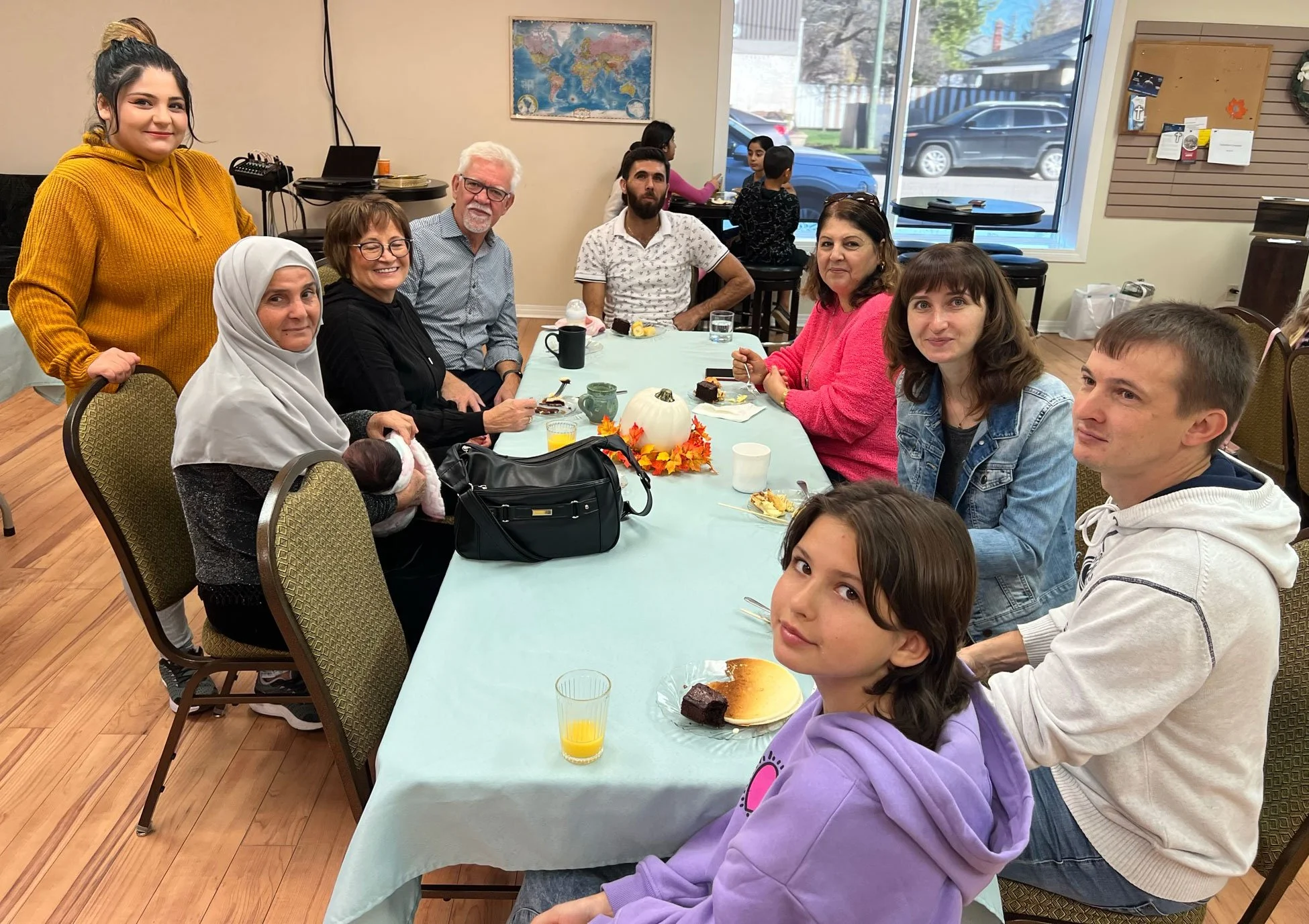
The ConneXion family consists of people from various cultural backgrounds. (Photo supplied)
I have always imagined Jesus walking among people, loving them, healing them, and valuing them regardless of their physical characteristics, culture, nationality, race, or faith. I imagine the kingdom should look like a mosaic, in which the combination of colours and shapes results in a beautiful work of art.
This beautiful work has been taking shape in our community, which we lovingly call the “ConneXion family.” We have been connected by God. People who would probably never cross paths or sit at the same table—because of such different stories and journeys—do that every Sunday morning in our church.
We can behold the beauty of the mosaic that the Creator has crafted: people from Syria with their hijabs and accents rooted in their mother tongue (Kurdish), talking with people from Ukraine, searching in English for a common point to understand each other. At another table, we see someone from Kenya laughing during a chat with some Canadians and Brazilians.
In our summer services, we’ve experienced the warmth of friends from India welcoming us into their homes with their traditional food, and the next week we were learning to dance Kurdish with our beloved friends from Syria—after enjoying a delicious meal full of diverse flavors and colours.
In our monthly “life circle” gatherings, created to discuss everyday challenges and cultural differences, we learn so much from one another. We discover, for example, that in Syria, Kenya, Canada and Brazil, there are many differences in how we nurture our faith, celebrate life, and even how we celebrate birthdays and conduct funerals.
And our interaction goes beyond simply being together. We learn and adapt: Brazilians love hugs—so let’s hug. Syrians love to dance at their celebrations—so let’s dance—and so on. Through this exchange, we become part of one another.
In our “breakfast with the neighbours,” it’s no different. I remember when Syrian women share their journey as mothers, while Canadian, Ukrainian and Brazilian women listen with enthusiasm, recognizing similarities. And it’s okay if English isn’t perfectly fluent. It’s not a problem. In fact, it’s not a problem even if someone cannot speak because of a disability that prevents them from doing so. We have the language of the body, the language of love, the language of music and the language of the Spirit.
And what about our children? They all run, play and laugh as one people, even though their stories began in very different places and circumstances.
We seek to welcome everyone. For this, we have been called. We want more than just to receive people, we want them to feel they belong to this family. This family where the love of Jesus is pursued in practice: through hospitality, connection, and listening.
Therefore, when you walk through our door, be ready to be greeted with a warm “Welcome”, or perhaps “Bem-vindo,” “Bienvenido,” “स्वागत है,” “Ласкаво просимо,” “Karibu,” or “مرحباً.”
“After this I looked, and there before me was a great multitude that no one could count, from every nation, tribe, people and language, standing before the throne and before the Lamb” (Revelation 7:9).
– Dani Caldeira