God’s presence come to life
the subtle difference between sacrament and sacramental
SBC Leadership Conference March 13–14, 2026, weekend recap

Patrick Franklin during the panel discussion.
SBC’s Leadership Conference topic this year was The Transformative Presence of Jesus in Baptism and Communion. Patrick Franklin, associate professor of theology at Tyndale University, was the main speaker for this weekend. He assumed the task of walking through perspectives on baptism and communion not familiar in our churches. These perspectives explored the presence of Jesus in baptism and communion.
To explain how Jesus is present in these church practices, Franklin introduced a definition of sacrament that transcends church denominations. But first, Franklin defined sacramental as “God’s presence in all things.”
He then gave an overview of the grand story of God’s presence among God’s people from the garden of Eden to Jesus to the Holy Spirit and to the church. Franklin finally showed us how two church practices, baptism and communion, embody the gospel story and how Jesus is present with us in them.
Sacramentality
When we hear the words sacrament or sacramental we might have a negative reaction initially. We might assume that sacraments are too Catholic. In our minds, we might immediately protest the idea of a works-based salvation. But this is not a true picture of what sacramental means in the life of the church. Sacramental, as described by Franklin, is the “presence of God in and through his creation.”
The sacramental refers to the physical expression of a spiritual reality within. We believe that God created the world, and we believe that “through him all things were made” (John 1:3). We also believe that God is ever present in all of creation because “in him all things hold together” (Colossians 1:17). We believe that God is present everywhere. Surely, then, we believe that God is present in our churches too.
The idea of sacramental is articulated by the Anabaptist scholar John D. Rempel in his book Recapturing an Enchanted World. Rempel explains that sacramentality is the hiddenness of Christ become visible. In the life of the church, we act out this spiritual presence with rituals and ceremonies symbolically, and then bring the presence of God into the world within us. In this definition, symbolically doesn’t mean that God is not actually present when we perform these actions. God is present in creation, in our churches and in our lives. God’s presence is at work through his creation. With these definitions of sacramentality, we can see that all created things are sacramental. All of creation shows that God is present.
Practically we know this is true. In our church services we believe that the Spirit is at work. When we sing worship songs to God, we know the Holy Spirit is present. When we pray as a church body together, we know that Jesus is present. When our pastors are preaching, we know the Holy Spirit is working through them as they deliver their sermons. When we share our praises and prayer requests with each other, we know that Jesus is present and hears our prayers. Beyond this, if we believe the claim in Colossians that “all things have been created through him and for him” (1:16), when we go on hikes in nature and witness a beautiful sunset, we see God’s presence all around us. Christ is present in all things.
A helpful way to visualize this presence is in the image of a temple. In the ancient world, people would build temples for the pagan gods to inhabit and to encounter their presence. Franklin uses the biblical imagery of the garden of Eden as a temple to show how God is present in our world. The garden in the creation account is God’s temple. We see that the garden is where humans encounter God. In this temple of creation, humans experience the presence of God constantly and clearly. But the fall (Genesis 3) distorts our ability to experience God’s presence. Humanity has been separated from God through our own actions, and sinfulness causes humanity to hide from the presence of God. Through sin and separation from God, it becomes difficult to truly experience God’s presence.
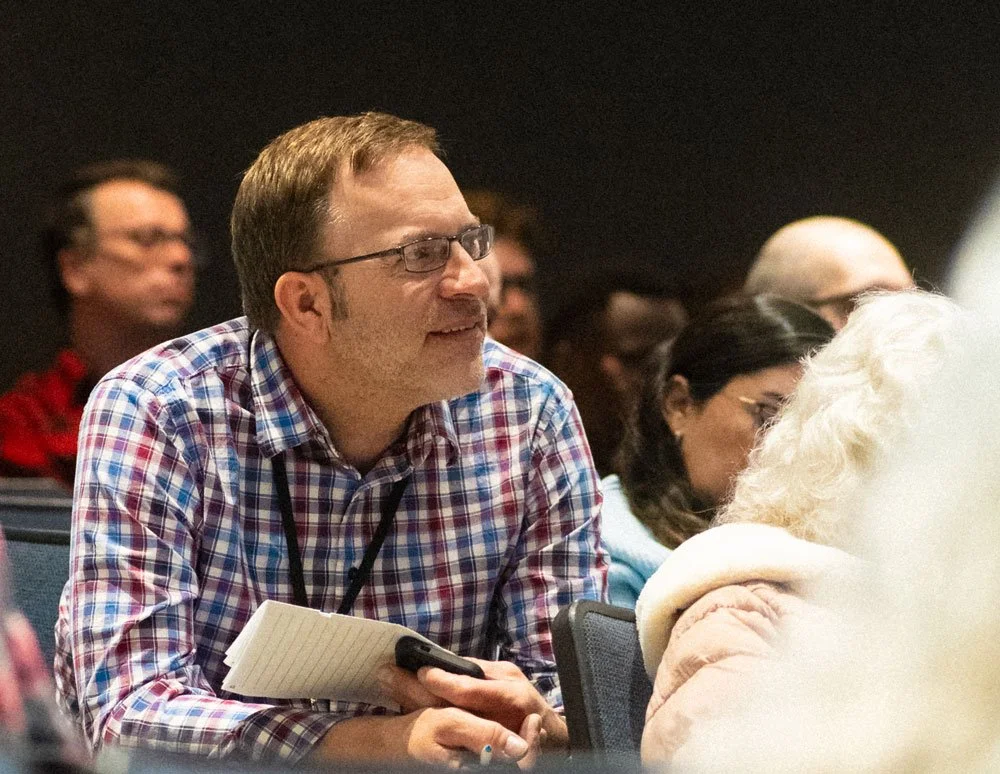
Conference attendees listen during Franklin’s presentation.
This separation hinders the role that humans were created for. Franklin explains that humans are special creatures, meant to be God’s representatives on earth. Humans inhabit this special place as priests to the world. In other words, humans act on God’s behalf in the world. But the distortion of sin prevents humans from accomplishing this task. Instead, you can see throughout the biblical narrative an attempt to fulfill this calling that never comes to be. First with Adam, then Moses and David, the Bible is full of humans falling short of this priestly calling.
However, God in his wisdom sends his son, Jesus, into the world to become the perfect mediating priest on our behalf. It is through Jesus that the world experiences the literal presence of God. Jesus is the Word of God become human, while remaining fully God. Jesus is the perfect priest, the mediator of God’s grace and presence to creation. If a temple is where we experience God’s presence, Franklin believes that first the garden was the temple, then Jesus became the temple. Then, after Jesus’ death and at Pentecost, Jesus sends out God’s Spirit to live among and within the disciples. Jesus’ followers become the temple of God, the place where you can encounter God. It is through the Holy Spirit that the church becomes the temple where you can encounter God. The church is the body of Jesus through the Holy Spirit.
Sacraments vs sacramentality
What does this have to do with baptism and communion? After all, we believe that God is present in all of creation. This means he is present in our lives, including when we pray. We are also fed spiritually when we participate in worship services and listen to the Word. We encounter God in all these practices. But there is a difference between creation and these practices.
While the world is sacramental—Jesus’ presence in and through all things—sacraments are specific practices that reveal Christ’s grace to us. Sacraments are practices that embody the gospel narrative. This is the difference between sacramental and sacrament; while creation is sacramental, not everything is a sacrament. In the wider protestant tradition, we believe there are two sacraments, baptism and communion. These are the specific and special parts of creation to which Jesus reveals his presence. When we witness and participate in these sacraments, we are encountering Jesus’ presence.
What makes baptism and communion different?
Baptism and communion are different because they were given to us by Jesus. In other words, Jesus has ordered us to do these things. The word ordinance reflects this reality. An ordinance is a rule or order meant to be followed. Jesus commanded us to baptize and to take communion, and so we follow his instruction. While obeying Jesus is enough to communicate to us that baptism and communion are different, this is not the only reason they are set apart.
Baptism and communion proclaim the gospel. If the entirety of creation is proclaiming God’s presence, baptism and communion proclaim the gospel message specifically. These two church sacraments especially proclaim Jesus’ death and resurrection. In baptism we die with Jesus, and we are raised to life with Jesus. We are joining in the gospel message and committing ourselves to Jesus. Similarly, in communion, as Paul summarizes, “For whenever you eat this bread and drink this cup, you proclaim the Lord’s death until he comes” (1 Corinthians 11:26). Participating in communion reveals what Jesus did on our behalf and is a continual reminder of that sacrifice. Both sacraments are ways that creation can proclaim the gospel story.
Humans are physical beings and experience the world through physical interaction. There is a common phrase (attributed to Bob Fosse) in musical theatre that I think summarizes the human experience of physicality: “When emotions are too strong for words, sing. When emotions are too strong for song, dance.” We as humans express ourselves physically because sometimes words don’t fully express how we feel. It’s why we hug our close friends after a long separation or embrace our spouses to tell them we love them. Physical acts communicate things to us in a way that words don’t always make clear. Baptism and communion are ways to physically interact with the gospel and tangibly experience Christ’s presence. Participating in church sacraments is a direct way we interact with Jesus.
What does this mean for the church?
When we combine all the factors that add into the role that baptism and communion play as sacraments in our churches, we begin to understand the rich and deep ways that Jesus meets us with his presence. Jesus commanded us to be baptized and to baptize others. When we do so, we are dying with Jesus and being raised with Jesus in new life.
Jesus commanded us to partake in communion. When we do so, we are proclaiming Jesus’ death and resurrection. Both are physical ways we encounter the gospel message in our churches and experience the sacramental dimension of those two sacraments. We should treat them with respect and understand the wonderful gift that they are from Jesus. A gift that enables us to encounter Jesus continually.
All photos by Scott Marble
Audio generated with AI voice technology.