If they wanted to, they would
Reflections on reaching out into our communities

As we consider the current context of ministry in Canada, there are many reasons to be encouraged. In a recent survey called the Reigniting Hope Report (2024), ministry leaders across Canada report increased openness to talking about spiritual life from their community members. Openness to the gospel itself is higher than ever, and willingness to accept an invitation to church is way up. At the same time, we are seeing the next generation of young adults (Gen Z—born 1997–2012) engaging deeply in matters of faith and spirituality and showing strong commitment to faith communities where they have become involved.
Looking around our communities, we see people from all over the world coming to our doors. Where we once needed to send missionaries to far-off places to proclaim the good news, these same people from different cultures and faith traditions are now our neighbours and open to meaningful connection and relationship.
All of this means that there are tremendous opportunities for us to engage in sharing the good news of Jesus with our communities!
Adding to this encouraging picture, we have clear evidence that churches and believers who are actively engaged in outreach are healthier and more vibrant in their ministries. Not only are they more likely to be growing in numbers, they are—more importantly—growing in the maturity of their members. On the flip side, we also know from studying the lifecycle of churches that there is a corresponding decline in health as ministries become more inwardly focused. (See Thom S. Rainer, “Five Warning Signs of Declining Church Health,” The Christian Post, September 30, 2009.)
In short, as churches and as individuals, we know that we should be involved in outreach and evangelism. All the relevant data tells us that it’s good for our spiritual health and vitality. And in a spiritual sense we know that the Holy Spirit goes ahead of us to open doors and change hearts. So why then, do so many of our churches and leaders say they are struggling to actually commit to outreach in our communities?
A lack of vision and leadership
At a recent ministerial meeting, I held a straw poll regarding perceived barriers to church planting in our churches. I was curious as to why we have not seen any new EMC ministry startups in the last few years. As I considered the responses, it became clear that neither a lack of financial capacity nor a lack of ministry resources and support were the biggest barriers. Rather, the top two answers were a lack of vision for reaching the community and a lack of leaders who were willing to go out.
As part of my ministry development work with our EMC churches, I subscribe to all kinds of blogs, podcasts, online newsletters, and resource networks and continually come across articles like: “10 Reasons Your Church Isn’t Growing,” “Five Steps to Improving Your Community Impact,” “Three Ways to Inspire Your Team.” The simple truth is that all the resources we could possibly want or imagine to help us have thriving, healthy ministries are available with a quick internet search. And yet, we often don’t take even that simple step. And so, we continue to struggle with outreach. Why is that?
One of the first answers that comes to mind is the simple phrase, “If they wanted to, they would.” Some of you may recognize this as social media’s version of pop psychology for those seeking help with their struggling relationships. It’s the ubiquitous answer to every question: “Why doesn’t my partner tell me how they really feel?” “Why have they stopped being romantic like they used to?” or the ever-popular “Why hasn’t he proposed yet?”
The harsh reality of the response “If they wanted to, they would” is that it’s a simplistic answer to what is often in reality a fairly complicated question. However, I wonder if it might give us a starting point to consider the question of why we might struggle with outward-facing ministries and church-planting efforts. Perhaps this phrase can help us bring this issue into focus—both in how it might ring true and in how it fails to address the deeper realities.
What’s true about “if they wanted to, they would”?
There are at least two ways in which “If they wanted to, they would” contains some truth.
The first point is simply that our actions do, in fact, speak louder than all our fine words or best intentions. Might we pause for a moment to let that reality sink in? Is it possible that we are comfortable with things as they are and are reluctant to introduce change that may disrupt? Or might there be a ring of truth in suggesting there is a lack of vision for reaching the lost, no burden for sharing the good news with our neighbours? And if so, can we be bold enough to call it out and insist on assessing the true picture of our church’s ministries?
Secondly, this phrase reminds us that our priorities reflect the choices we are making. In short, we are responsible for the choices that led us to this situation. As we think about the ministries of our church and community, do we have a sense of clarity around our vision? Do we know to what extent our ministries and investment of resources serve that vision? If not, what is it that we do value or show that we value through our choices? What is the balance between ministering to insiders and reaching out to our wider community?
I truly believe, however, that our churches and congregations want to fulfill the Great Commission to reach our neighbours with the good news of Jesus. Rather than simply being a matter of having other priorities, perhaps there are elements that are keeping us from fulfilling that desire. I see that there are also at least three ways in which “If they wanted to, they would” fails because nothing is ever quite as simple as it seems on the surface.
How “if they wanted to, they would” fails
One reason we struggle in spite of our desire for outreach is a lack of capacity. Sometimes there are very real barriers as to why we are unable to effectively carry out the vision that we have discerned as a church. For example, a common issue affecting capacity may include our dated leadership and ministry structures. Perhaps our ministries and committees were designed for another time, another context decades past.
A second barrier to effective ministry engagement is unaddressed relational issues just beneath the surface of congregational life. Where there are unresolved conflicts and dysfunction, it is nearly impossible for anything healthy to grow, either relationally or in terms of a unifying vision for ministry. As communities called to reconciliation, we absolutely must identify and address these relational fractures if we expect our testimony to have integrity. Another form of unhealthy relationship can be our relationship with the past. Whether due to past struggles or, more often, golden days of long ago, when our current ministries are not grounded firmly in the realities of our current context, we will struggle to see success.
Third, our good intentions for ministry and outreach can simply be undermined by a lack of understanding. In terms of a marriage relationship, when we have not articulated our needs or expectations, we should not be surprised when our spouse does not meet them. In the same way, when we have not repeatedly communicated the vision and ministry goals of the church, we should not be surprised when we see a lack of engagement and poor results. More specifically, when there is no clear strategic plan, and our congregations have not been equipped to understand their gifts, there will be a corresponding lack of understanding as to where and how each person can contribute to the greater vision.
“If they wanted to, they would,” while helpful in reminding us that actions speak louder than words, is simply inadequate to describe the challenges we face in reaching out to our communities. At the same time, it does raise some uncomfortable questions that are essential for us to address. I truly believe we want to have healthy growing churches with vibrant ministries that are reaching our neighbours. Would you agree? In that case, what will it take for us to become the welcoming, relevant, thoughtful, contextual, impactful, and faithful churches that we desire to be? What will it take for us to have effective ministries meeting the needs of our communities, filled with people longing for an authentic encounter with God, connection and belonging, and a place to contribute meaningfully with their own gifts?
I think the beginning of an answer is remarkably simple. It requires the very same things we see as essential in every real relationship. It takes intentionally setting our priorities. It takes investing quality time. It will require sustained and focused effort. The question that lingers is, “Do we want to, and will we?”
Thinking about next steps
How can I help my church to be healthier?
Which ideas in this article resonate with the context of my church?
What is the conversation that the leadership of our church needs to have?
How can we invite our Conference to help us?
Photo credit: iStockphoto.com
EMC resources for churches to direct outreach efforts
#1 Leading with Vision
Leading with Vision is designed to empower and encourage church leaders at all levels to pursue God’s call to serve with greater courage and confidence. This equipping workshop is typically delivered over a weekend of interactive training sessions using a simple framework that clearly outlines the principles and best practices of effective leadership.
Through Leading with Vision, your leaders will gain practical insights about:
how their God-given DiSC style shapes their approach to leadership
personal strengths and challenges within key areas of leadership practice
the current dynamics, challenges and opportunities within your ministry teams
the process of leading ministries through effective change and renewal
identifying tangible action steps to move from vision to desired outcomes
Before the workshop, all participants complete an online Everything DiSC assessment. Then during the training sessions each member of your team will receive their own personalized Everything DiSC Profile results and a resource package of materials for our training time together.
Through these profiles we explore how each person’s God-given gifts and personality contribute to the larger picture of leadership strengths and challenges in your church. We then turn to learning practical and effective skills in three essential aspects of effective leadership, which are Crafting Vision, Building Alignment, and Championing Execution.
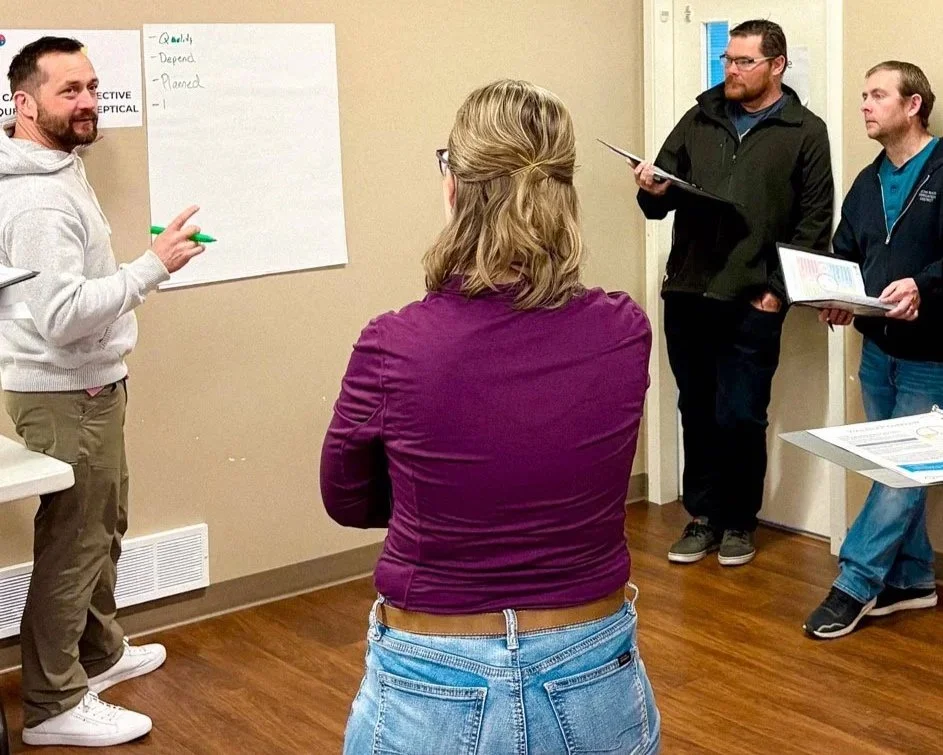
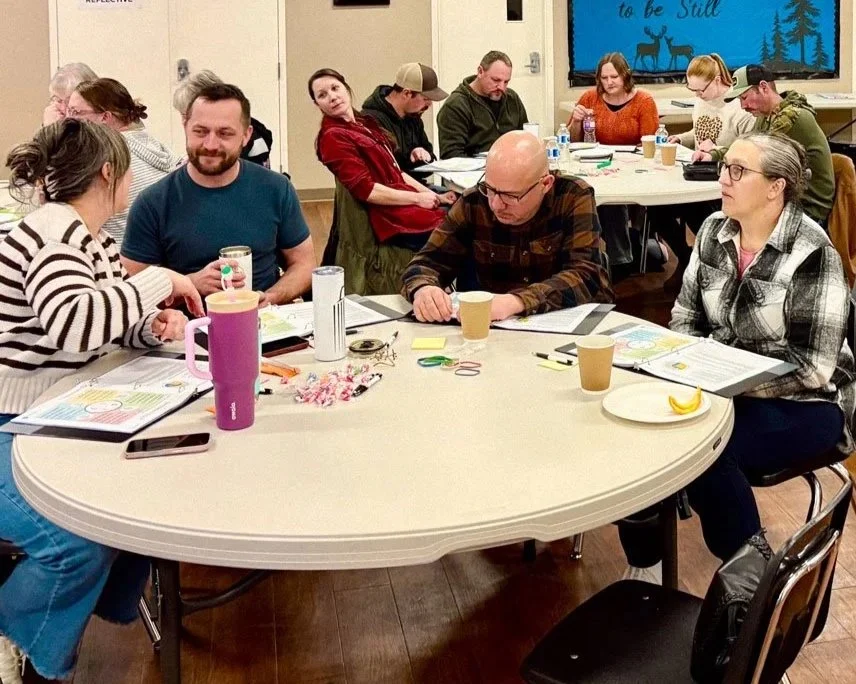
These Leading with Vision sessions are highly interactive, allowing individuals to learn from each other while also identifying actual concerns and growth needs within your team. Investing this time in equipping leaders at all levels is a great step in moving churches toward healthy dialogue, ministry discernment, and effective action in carrying out God’s kingdom vision.
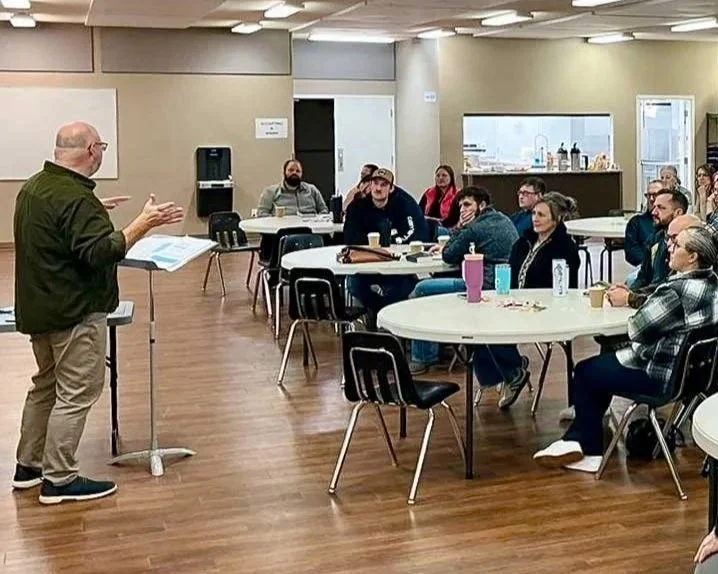
Carl Heppner directs a Leading with Vision workshop at Taber Evangelical Church earlier in 2026.
#2 Church Health Assessment
How would you describe the health of your church in each of the following six areas of ministry?
Spiritual Life and Discipleship
Worship and Experience of God
Belonging and Relationships
Engagement and Service
Mission and Outreach
Leadership and Vision
How would you rate them from strongest to weakest?
What should be the next step for your church?
Which of these is an area of growth for you personally?
(A Church Health Assessment survey is available from the EMC office upon request at info@emconference.ca)