Is EMC Missions work still relevant?
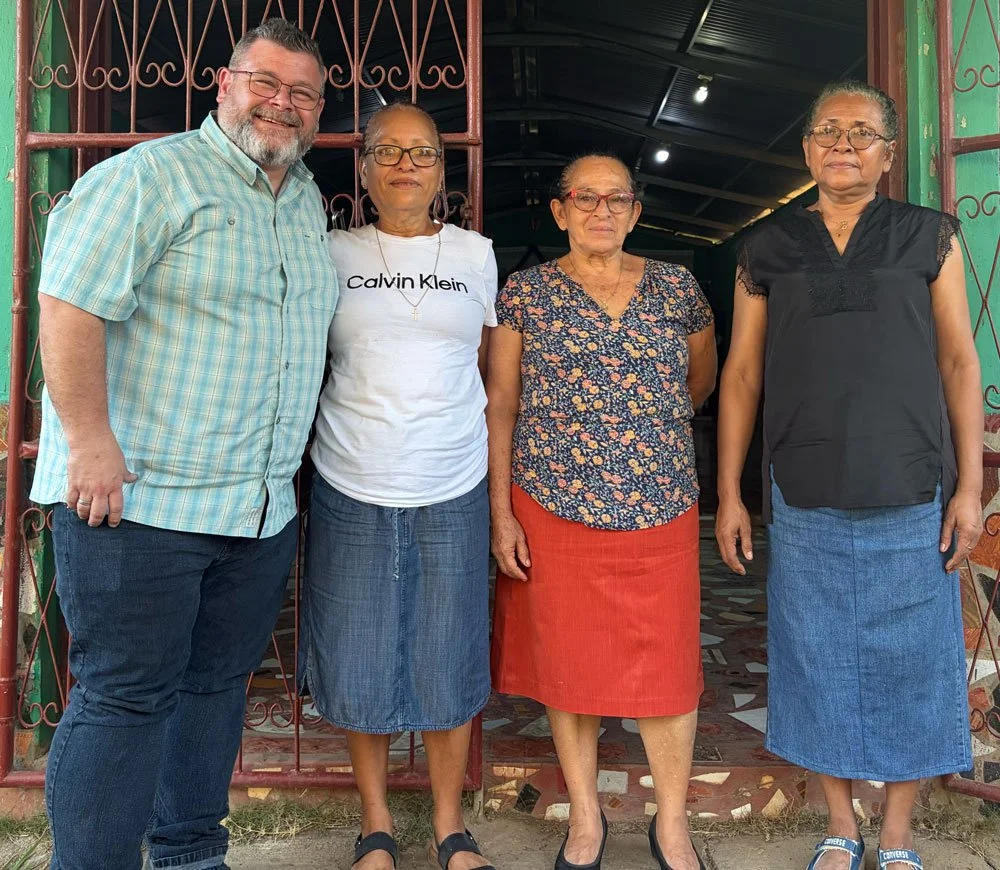
EMC Director of Next Generation Mo Friesen (left) stands with local church leaders in Nicaragua on a field visit earlier in 2026. (EMC photo)
In his book For the Sake of His Name, David M. Doran says, “The chief means by which God will glorify Himself, if you accept the weight given in Scripture, is by saving people ‘from every tribe and tongue and people and nation’” (Revelation 5:9 NASB1995). The apostle Paul writes to the church in Corinth saying, “All this is for your benefit, so that the grace that is reaching more and more people may cause thanksgiving to overflow to the glory of God” (2 Corinthians 4:15).
The church gathers and the church scatters, and in both cases the goal is to make much of Jesus and bring glory to God. A church that only gathers but does not intentionally and missionally scatter is not only living in disobedience to the Great Commission but short-changing God of the glory he deserves from every tribe and nation.
Why does it matter so much that we are doing missions together as a Conference? Because missions is the primary way we express our passion to bring glory to God outside the church walls. Our gathered worship must lead to scattered mission. In fact, this passion to glorify God needs to be the driving force behind our missional work; more so than the tremendous work of meeting the spiritual, physical, and emotional needs of people around us.
In Canada, it has not been hard for the EMC to build autonomous, self-sustaining, self-governing, self-propagating, and self-theologizing churches. But in many underdeveloped nations where the EMC serves, the journey to becoming self-sustaining is difficult, which is one reason we continue, in obedience to the Great Commission, to send workers who assist in starting churches.
What I have seen in my years working in the EMC is that our global churches have done incredibly well in the self-theologizing and self-propagating areas of local church autonomy. Governance and sustainability are often hard components of this work. And that is why in each country we serve, from the moment we arrive, we are already thinking about what our exit strategy will look like, and what steps we can take to get there.
We celebrate that the Fraternity in Nicaragua has been almost entirely autonomous since the early 1990s. The Conference of churches in the state of Chihuahua, Mexico, has not had an EMC missionary since the early 2010s. In Paraguay and Bolivia our workers continue to see significant value in maintaining our presence there. This is why we continue to recruit workers for those locations. In Guadalajara, Mexico, we also see more fruit, and we recently sent another couple for language study in preparation to serve. And most recently in Spain, with the continuing surge of Moroccan migrants, we are growing our team there to engage in gospel conversations.
The EMC Board of Missions is incredibly thankful for the support of our churches in the work we do together!
Audio is generated with AI voice technology.