When God plays the piano
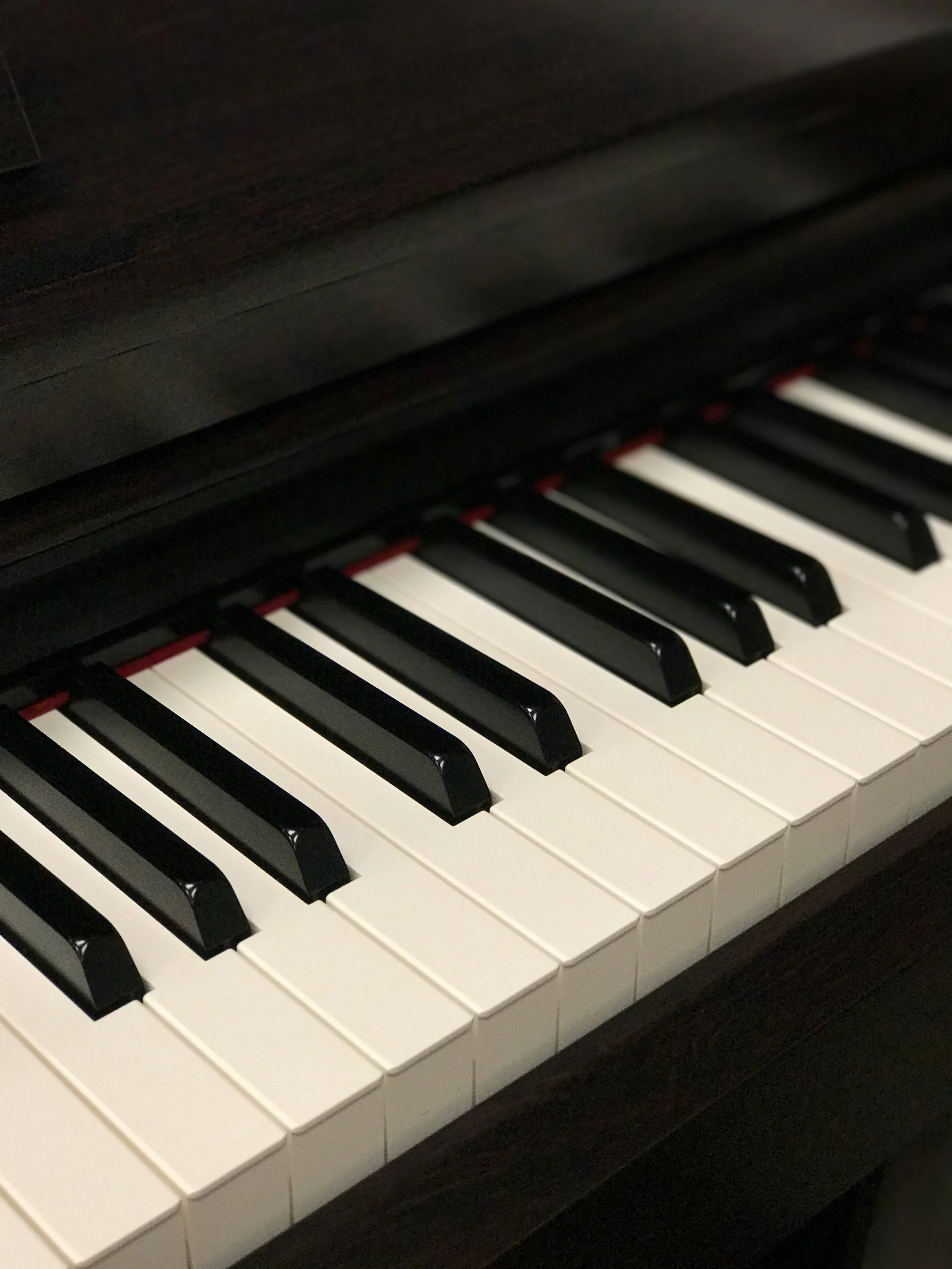
Imagine a pianist who could say “I love you” to his lover by playing a song at the piano. The better the pianist and the better he knew his lover, the more compelling this love song would be. In some ways it might be even better than talking or writing a letter.
It would have its limits. For example, it would be hard for a piano piece to say, “I love the way the sun shines on your hair when you’re making coffee in the morning.” But music might express how he feels when he sees her standing in the light.
Where is this going? When God wanted to say, “I love you” he chose the perfect “musical instrument” to express this—Jesus. The instrument God chose was a first century Jewish peasant man. Using only the “music” of ordinary human nature, Israelite piety, Jewish customs, and the Aramaic language of a first-century rabbi, God sang “I love you” to all the world, in every language. Confined only to what could be said with this infant’s cry, this child’s banter, this young man’s sermon, this obedience to death on a cross, God sang “I love you” with truth and power. God chose that instrument because it had precisely the right tone, range, timbre, and volume to say what he meant in a song we could play along with. And how the people danced!
Of course, not everything in the eternal abyss of divine love was expressed by Jesus in his earthly life. One professor explained this by comparing Jesus to a bottle of water from Lake Ontario. The water is truly Lake Ontario, but the bottle does not contain the whole of Lake Ontario. However, we will never discover anything in all the depths of Lake Ontario that contradicts what is in that bottle.
Jesus, as the infinite God, expressed God’s eternal love through a finite human instrument. Take God’s freedom—the sovereignty of his love—as an example. Nothing will ever prevent God from loving as he wills to love. But how does this limitless, universal freedom to love sound when God plays it on the instrument of a wandering Jewish preacher?
In Mark 1:32ff, on the morning after an evening of amazing healings in Capernaum, the disciples awake to discover Jesus has slipped out at night and is gone. Oh no! Where is our local wonder worker? They dash about searching and eventually find him out in a deserted place, praying to his Father. They say to him, “Everyone is looking for you.” He answers, “Let us go somewhere else—to the nearby villages—so I can preach there also. That is why I have come” (vv. 37–38).
Can you hear that music? There’s the eternal, dashing freedom of God who will love as he wills to love. Capernaum could not close him in and claim him for themselves; his love was for everybody! That is the boundless symphony of God’s love played now on the instrument of an ordinary man who never got further from home than he could walk.
And here is the stunning truth: God is perfectly capable of playing that song on the instrument of your little life. With this Pianist also being the piano maker, you would be quite the piano, no matter how ordinary you look. But chiefly this is because God is one virtuoso pianist, who delights in the love conveyed in the song that is your life.