How Step Up Construction is building bridges—and lives
By Andrew Braun
Inner City Youth Alive executive director

In 2009 I volunteered for several months with Torchbearers International in Greece. It gave me the opportunity to lead Bible school students through historical tours in the ancient cities of Corinth and Philippi. Today, as you walk across the dusty ruins of Corinth, you can see the remnants of a bustling city filled with enterprise and commerce. The heart of the city, the Agora (a public square and marketplace), contained workshops and vendors selling leatherworking tools and goods associated with trades such as Paul’s tentmaking. It was fun to imagine Paul and the early church leaders walking the streets, building a kingdom-focused business as tentmakers, and sharing the gospel in marketplaces.
Paul ran business enterprises as a missional strategy in Corinth: “[I] preach[ed] the gospel of God to you free of charge” (2 Corinthians 11:7). Tarsus, Paul’s home, had the Greco-Roman reputation for training tentmakers. I’d like to believe that when Paul was in Corinth, he recognized the market demand for tents and wisely used his skills to invite new followers of Jesus to work alongside him, disciple them, maintain the integrity of his gospel message, and fund their missional activities.
Fast-forward to the twenty-first century; can Paul’s model of missional enterprise apply in Manitoba? I’d argue it can easily transfer. At Inner City Youth Alive (ICYA) and Step Up Construction, we’ve seen tremendous fruit. Social enterprise provides revenue, which in turn allows us to hire additional inner-city youth to work full-time, be welcomed into our Christ-centred community, and receive charitable donations to help us provide discipleship and wraparound support (practical help with other needs such as housing, education, and transportation). This loving community guides youth to receive the same message Paul wrote to the Colossians: “Whatever you do, work at it with all your heart, as working for the Lord, not for human masters” (Colossians 3:23).
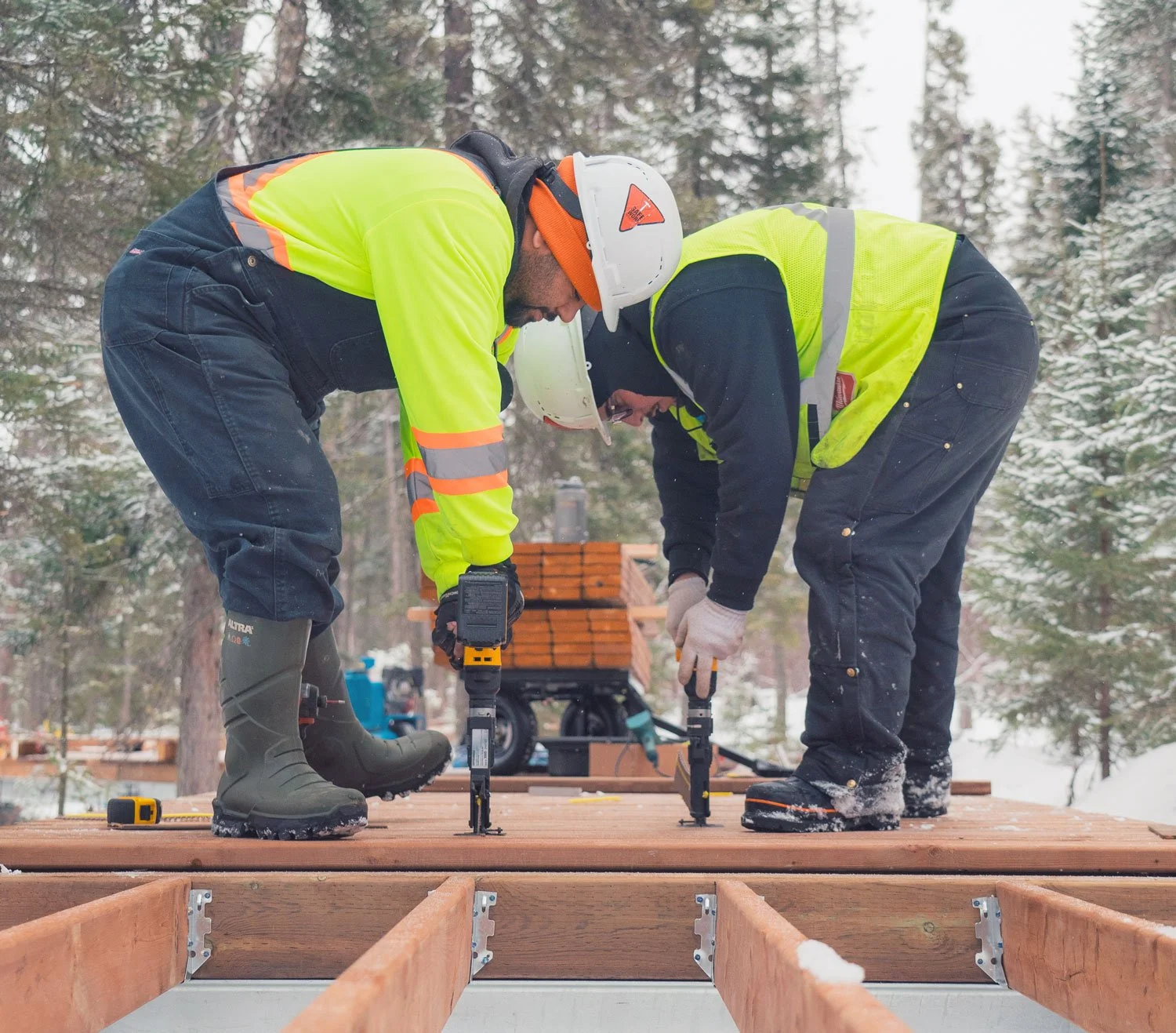
A Step Up crew works at Boreal Trails in Riding Mountain (2024). (All photos supplied)
Overall, the ICYA team believes that a redemptive social enterprise follows Paul’s tentmaking example by using meaningful work not only to generate income, but also to create opportunities for discipleship, relationship, dignity, and gospel witness. Like Paul in Corinth, it integrates mission with vocation, showing that productive work and the ministry of Jesus can advance together for the good of people and the transformation of communities.
When ICYA was developing Step Up Construction, we asked ourselves how a social enterprise construction project could translate into an effective ministry. Weren’t we a drop-in centre, wilderness camp, and community ministry? Would this cause our mission to drift a few degrees away from our purpose? It quickly became clear that the DNA of social enterprise was compatible with our ministry philosophy. We adopted the conviction that we’re not hiring crew members to do renovations; we do renovations so we can hire crew members.
The drive for business activity meant we could employ more youth from Winnipeg’s North End. We took on complex projects to expand the program’s impact. We increased hours, hired crew members, expanded the project’s scope, placed bids on bigger jobs, and hired a project coordinator and a financial controller to create opportunities for discipleship. We took on more projects so we could hire more youth.
In several respects, this is the model we’ve used for 40 years: programs that allow relationships to grow and live out the good news. Bringing in the North End’s youth and inviting them into our community was always our goal.
One of our project’s coaches told me that he used to be a pastor. He often had only a few hours of small-group or one-on-one discipleship each week. At Step Up Construction, he has 40 hours with a crew. In 40 hours of mudding and tapping walls, driving to job sites, eating lunch, and correcting errors, he builds relationships. In this way, he is living out his calling to “go and make disciples of all nations” (Matthew 28:19). Over the past year, he baptized five young men who began leading crews at Step Up Construction.
Step Up Construction leaders need to solve the same questions of other small business owners: do we have a healthy cash flow, are invoices timely and accurate, is the product quality, can we continue to build trust with clients, and are we able to pay our salaries and bills? Our answer is similar to many in business. We trust in the faithfulness of God, are willing to learn and adapt, and work hard to be more efficient than our competitors.
Early on, I worried if the pressure would be too much for our crew members and leaders. Thankfully, I’ve been proven wrong. The stress on the work site doesn’t compare to the pressures they faced in gangs or prison. But we still equip each crew member before ever stepping on the job site. That is where the charitable aspect of ICYA begins. Our community ministers invite spouses to a weekly Bible study, the drop-in staff invite kids to attend, and camp staff urge youth to explore Gem Lake Wilderness Camp. These opportunities provide a healthy community outside the construction site and bring family members closer.
The DNA of social enterprise
In Winnipeg’s inner city, a redemptive social enterprise recognizes that poverty is rarely just a lack of income. It’s connected to disrupted relationships, limited opportunities, trauma, isolation, and a diminished sense of purpose. Youth have told me they have never left the North End—their worldview is locked into its 12 square kilometers.
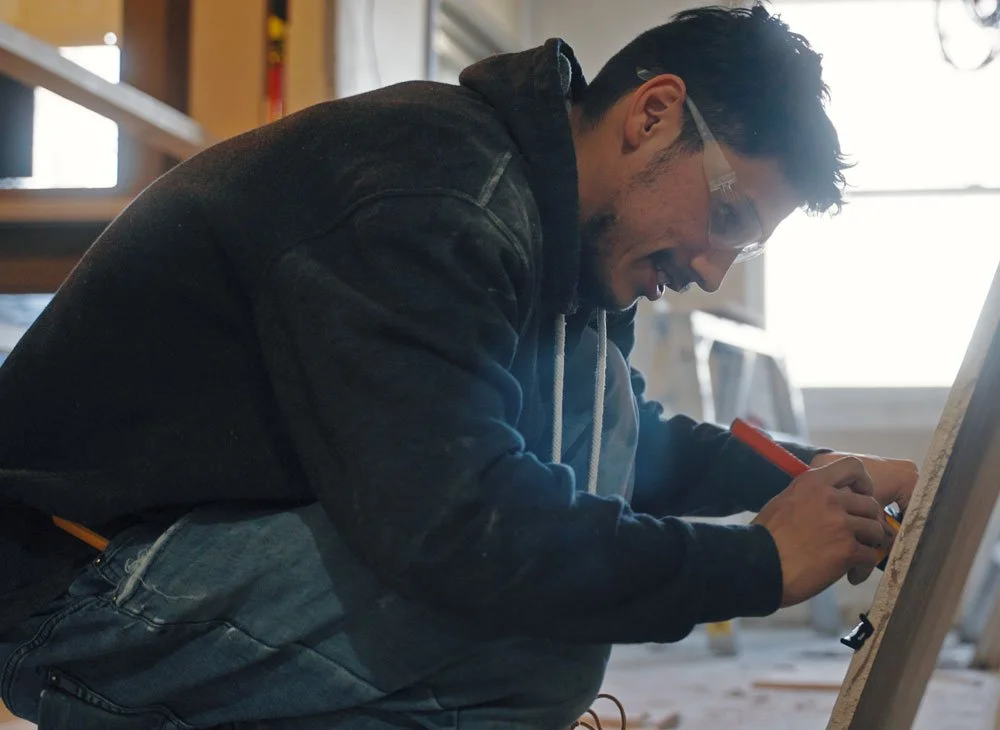
Step Up Construction partnered with Pier Solutions in 2025.
A Jesus-centred social enterprise responds by creating meaningful work where people can earn an income, develop skills, experience belonging, discover dignity, and encounter the transforming love of Christ.
Like the tentmaker Paul, it refuses to separate vocation from mission. Work becomes more than a means of generating revenue; it becomes a context for discipleship, mentorship, healing, and community transformation. Rather than simply serving people, a redemptive social enterprise invites people into productive work that affirms their God-given value and equips them to contribute to their families, neighbourhoods, and city.
For the youth in the North End of Winnipeg, social enterprise creates pathways where people who have often been defined by barriers can instead be defined by gifting and calling. A redemptive social enterprise seeks not only to alleviate poverty, but to restore people to the fullness of who God created them to be, demonstrating the kingdom of God through both meaningful work and relationships.
Alignment to ICYA
How does the DNA of social enterprise align with ICYA’s core mission? Our mission is to “bring hope and a future through Christ to youth and their families in the inner city” This statement was inspired by Jeremiah 29:11: “‘For I know the plans I have for you,’ declares the Lord, ‘plans to prosper you and not to harm you, plans to give you hope and a future.’”
This promise from our heavenly Father, when presented to youth in our community, helps them glimpse what could be: a promising future, a hope for tomorrow and years of fruitfulness to come. To live out this promise takes healthy relationships and time. This is the model of discipleship we observed from Jesus. He walked down the pebble-filled beach on the Sea of Galilee, challenging two brothers to “come, follow me … and I will send you out to fish for people” (Matthew 4:19). For the next three years they lived and travelled together.
Most of us spend Monday to Friday at work—in offices, on construction sites, in retail stores, and in other workplaces. So, ICYA’s team has developed a Jesus-centred workplace on the construction site that welcomes in previously gang-involved youth from Winnipeg’s North End. Quickly, healthy relationships form, and youth begin to see the fruit of their hard work.
By Kent Dueck
Inner City Youth Alive founder

In my Global Focus article, “No compromise on Jesus or mission,” published in the March/April 2026 issue of The Messenger, I left you with a stone in your shoe. The Jesus manifesto, as I call it—Jesus’ declaration in Luke 4:16–21 that he came to bring good news to the poor and freedom to the oppressed—calls us, as Christians, to take the lead in this work. But when we look at our churches, workplaces, and communities, where do we see this mission taking shape? Where are we being called to act?
As someone who has given 40 years to caring for the poor, I feel like we could use a little encouragement (me included). Things are really spinning out of control in Winnipeg. Maybe your hometown or city is starting to feel the pressure of the opioid crisis as well. Maybe you know someone who died an untimely death or have sat with a family grieving the loss of a loved one. At ICYA, we were involved in 44 funerals in 2025—all of whom died young. So, our mission is focused on figuring out how to function in this unprecedented moment.
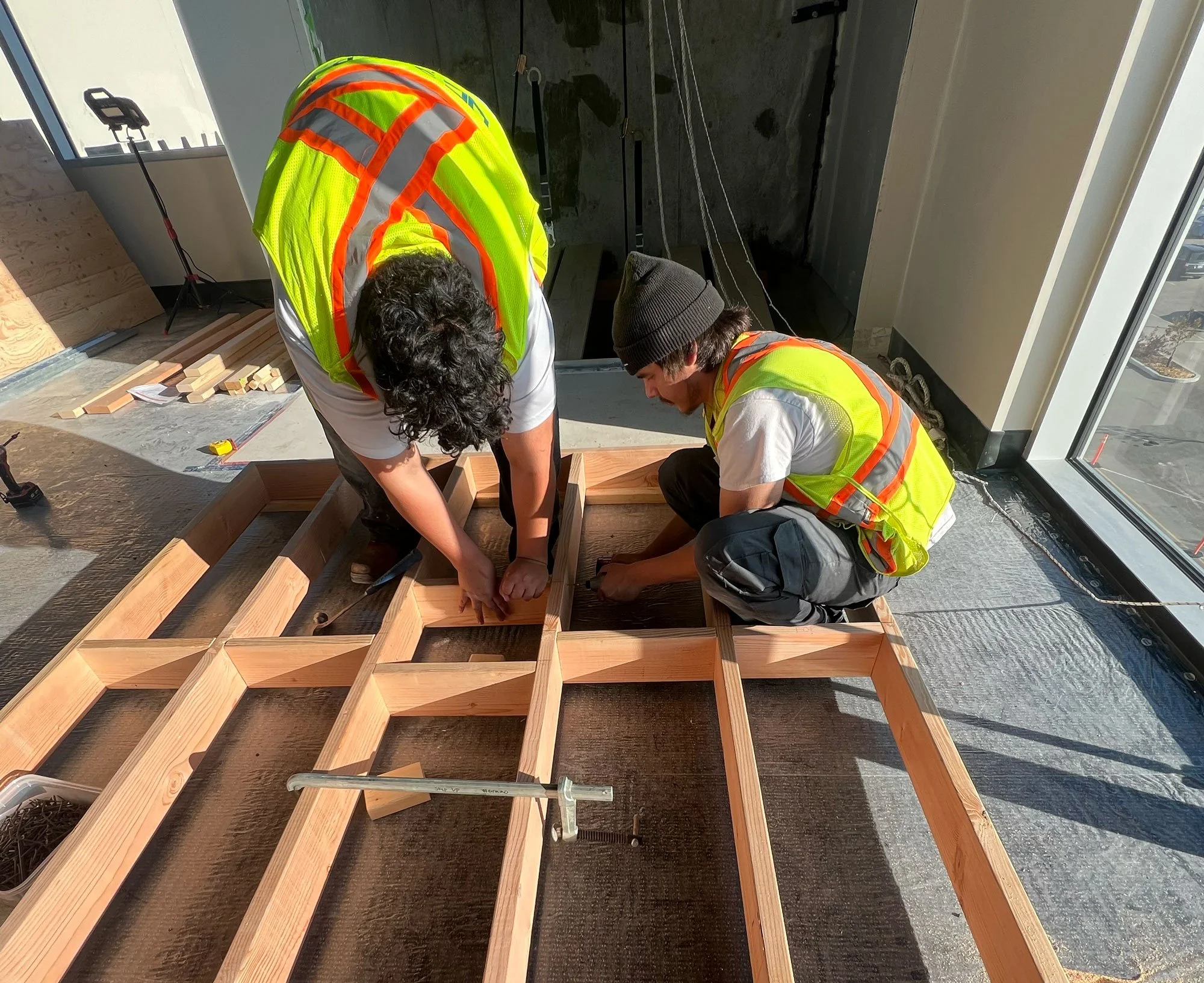
Step Up workers build a suspended platform (2025).
We have felt like it’s time for some new parables. Not extra-biblical parables, but more like a time for a fifth gospel. There is Matthew, Mark, Luke, and John and then the gospel as lived out by people of faith. An idea often attributed to Dwight L. Moody is that, out of 100 men, one will read the Bible, the other 99 will read the Christian. How then can we orient our faith communities so the world will see the gospel as good news again?
The parables Jesus told were edgy, conflict-rich, and full of poetic mystery; you couldn’t ignore them. The disciples needed explanations about the seeds that fell on different ground or about who their neighbour was. Jesus’ audience often walked away wrapped in questions but knowing they had heard something deep and important. Could we, today, tell new stories about what God is like, and could those stories be the best way to speak into all the pain in our world?
The story of Step Up Construction began with no fanfare. Tom, our operations manager, came into my office one day with his hat in hand. He was almost apologetic when he offered up that God had laid something on his heart. God had called him to some scary kingdom actions. At the same time, Tom also feared what would happen should he decide to turn and run in fear. “Kent, I think God is asking me to start a construction program to help youth,” Tom said. These were youth who found themselves in the exact same place Tom had been at their age. Tom is the best human soul, full of wisdom and depth. We discerned a path forward to talk to our board at ICYA. I implored the board to build the plane while we flew it.
Making bridges
I want to give you a window seat to that journey and the beautiful new story that is Step Up Construction. Anthony, one of our Step Up leaders, often reminds our team that none of us is smart enough to do this. God is telling a story through this venture. It’s our story and we tell it only to encourage you to dream about what your faith community might do to make the gospel good news in your context.
We are literally repairing bridges all over Manitoba and Saskatchewan while former gang-involved young men cross into their best future. Last year, four young men who might have been candidates for homelessness bought homes. If you arrive at Step Up Construction’s main office at 7:15 a.m., you will see a crew of young men in the Word, praying for each other. Last year, we baptized formerly gang-involved young men into a new life.
This ministry is irresistible. You can’t hate it. We have so many people wanting to help us. We’ve even had to develop a strategy to communicate with atheists, who have noticed what we are doing and desperately want to help fulfill the mission, but don’t share our faith in God. It’s so beautiful what God is doing through Step Up Construction; we know for sure it’s all him.
Audio is generated with AI voice technology