Are there any people with disabilities in your church? Have there ever been any people with disabilities in your church? Should there be people with disabilities in your church? Have you ever asked any of these questions about your church?
If you answered yes to any of the questions above, you may be an outlier. You may be an outlier because, generally, Christians don’t think much about the presence of disability. Or maybe it’s more accurate to say that Christians don’t think much about the absence of disability. Disability, for many of us, is not something we pay much attention to. Churches—especially church leaders—are often overwhelmed and overworked, using all their energy to make budget lines work, fixing old appliances that are breaking down, making sure you have a sermon on Sunday, and, of course, caring for the souls in your church. There is often little time or energy to do more or to think of something more to take on, especially as costs are rising and volunteer labour is decreasing. Disability is often—unintentionally, perhaps—out of sight and mind.
I want to suggest that, despite the strains that are already present on pastors and church leaders, disability is something that needs to be given serious consideration in our churches. I do, in fact, think that Christians should care about disability, and in what follows I will show why caring about disability affects more than just the disabled people who do or do not show up to church on any given Sunday.
Disability: What is it?
What do you imagine the ideal human being to be like? What are their features? What are their abilities? Are you more concerned with what they can do physically? Are you more interested in how emotionally attuned they are to situations? Do you care about character, compassion, virtues, and strengths?
I think every person, if pressed, could give an account of how they understand the ideal human being in all their traits and capacities. But I also think that if we were to take a survey of ten different people describing their ideal human being, we may very well get ten different accounts of what the ideal human being is like. That’s because nowhere in Scripture do we get a list of explanations of what the ideal human being ought to be like. We don’t get a list of traits or capacities, nor do we get any description of looks or physical features.
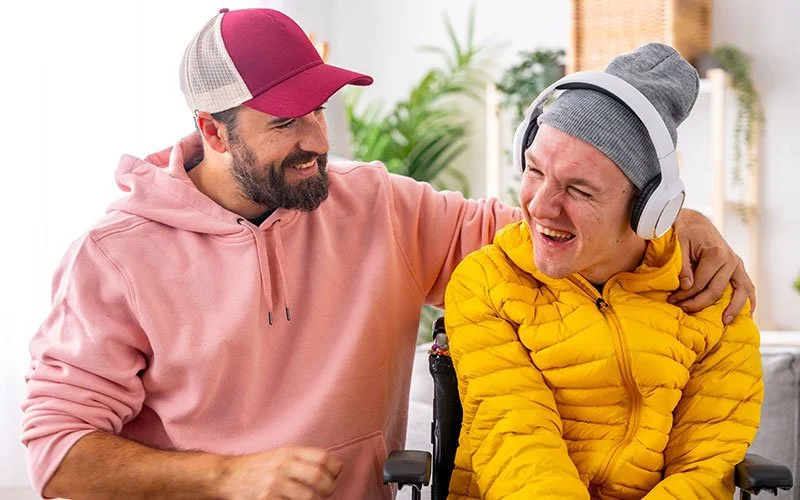

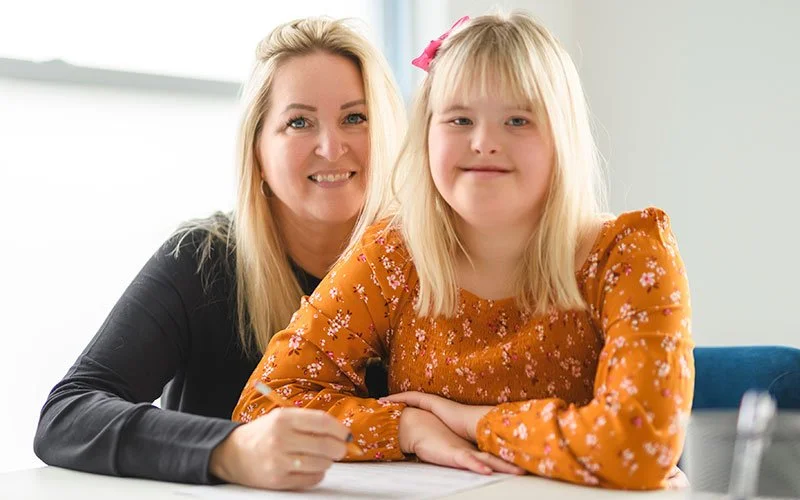
What does this have to do with disability? I raise this idea precisely because the ideal human being doesn’t exist. There is no such person alive today who is the ideal person, because we all fall short of whatever imagined ideal we come up with. All fall short. None of us meet the mark. And that’s okay. That’s okay, because many parts make up the one body, and we need people with all capacities and abilities to make up the rich tapestry of human life. It’s good to be dependent on the work and abilities of others.
Many of us are on board with this, but we may not be as on board with my next claim: disability exists as a perceived deviation from our imagined norms. To say that a bit more simply, people with disabilities—just like everyone else—fall short of our perceived ideals. Yet we continue to put people with disabilities into a box, viewing them as worse off or less than, understanding them through our fear of disability before anything else.
The reason this perception is a problem is because disability doesn’t exist. Okay, maybe that’s not quite right, but baked into the word dis-ability is the idea that disabled people do not have one of the certain perceived abilities that we think ideal human beings need to live a good life. Blind people are perceived as deviations from the need for sight. Paraplegics are perceived as deviations from the need to walk, run, or jump. People with Down syndrome are perceived as deviations from the need for a certain kind of ability to think and process decisions.
What I mean by this is that there is nothing that holds the experience of blind people, paraplegics, and people with Down syndrome together other than we understand them to be different from us in a way that seems irreconcilable with our understanding of what the ideal human being ought to be. There’s no one single thing that disability is. And this makes it really complicated to talk about.
Disability and the local church
Disability, then, is less a question about ability and more a question of identity. While I would never want to suggest that people with disabilities don’t face real, difficult challenges in their lives, I don’t think that there’s anything inherent in one’s disability that makes them worse off or lesser than anyone else in our church. If that’s the case, I think there are significant implications for our churches. Because the reality is, often, people with disabilities are not in our churches. A 2018 American study suggested that while 84 percent of people with disabilities identified as religious, only 45 percent attended a place of worship monthly. This means a significant portion of people with disabilities are not in our churches, even though they believe that faith is important to them. As churches, we should be asking: why?
I would imagine that most readers of The Messenger go to church, and that most would also consider their church a welcoming place. And I don’t want to deny that it is likely a welcoming place for them. But frequently, people with disabilities don’t feel welcome in churches if they’re even able to get there in the first place. While people with mobility impairments or cognitive challenges may be unable to drive or walk themselves to church, relying on public transit (where available), support professionals, or volunteers, getting in the door is only the first challenge that people with disabilities face (assuming there is a ramp or elevator to assist them).
Many disabled people have expressed that they don’t feel like they belong in churches. That could be for reasons of physical access, or it could be because they are avoided and nobody talks to them. I don’t say this to blame anyone or make anyone feel guilty. As a parent of young kids, I know that my first order of business on a Sunday morning is to track my kids down, and as a result, I am not always the most welcoming person to newcomers. But we shouldn’t presume that being a welcoming community comes without a price.
Recently, I talked with a pastor of a small church who wanted to serve a family with a neurodivergent child. One common feature of neurodivergent people is difficulty with sensory processing, so sounds, smells, bright lights, and other stimuli may result in adverse behaviour. This church wanted to accommodate this family, but there was resistance to too much change in the congregation. People wanted the family there, but they wanted them there on the congregation’s terms.
This, I think, is the rub. How much are churches willing to change to serve others? How much are they willing to try something new, to change how they gather, to change how they worship, if it means more people are welcomed into the body of Christ? Because that’s what is at stake here, really. By keeping out people with disabilities, we are keeping out members of the body of Christ, and without members of the body, Paul says we are incomplete (1 Corinthians 12).
What can we do?
I’m an optimist by nature. And as an optimist, I am going to assume that readers of The Messenger are committed to living out their faith in Christ in all aspects of their life. And while I can’t provide a way to ensure that your church is a perfect place of welcoming for all people with disabilities, I can offer a few suggestions as to where we can go from here in thinking about the place of disability in our churches.
First, and most basically, take stock of who is in your church and who is missing. If there are people with disabilities in your church, why not ask them about their experience of being disabled and in church? What do they like about your church, and what keeps them coming back? What challenges do they face, and what would they wish people would recognize about their experience? If there are no people with disabilities in your church, consider why that might be as well. Is it an issue of access? Are people able to get to and into your building? Is there a space for them to sit? Is there a place for them to go when they feel restless? Can they hear the message? Is the music too loud? Consider an accessibility audit if you need help figuring these out. There are many free versions online for you to start thinking from.
Second, once you’ve taken stock, consider one meaningful change that you can make to your church that would make it more welcoming to people with disabilities. Maybe it’s a building project where the church can gather resources and make the space more accessible. Maybe it’s a change to the worship service to make it more accommodating for neurodiverse people and those with sensory processing difficulties. Maybe it’s providing respite for a family with a child with disabilities so they can have a free hour to sit and worship. Start small, because you cannot fix everything at once.
Third, engage disability service organizations in your communities. Ask for their feedback and input on what people with disabilities in your community really need. Maybe they need help driving an accessible van. Maybe they need more volunteer support workers to assist with programming. Maybe they have advice for accommodating and welcoming people with disabilities in your churches. This is the best way to make quick connections with disabled people in your community you’d otherwise miss.
No church can be all things for all people, but we all can do our little part in our little corners of the world. And, I think, once we begin this work, we will see that it’s not only people with disabilities who benefit, but rather the whole community who is changed and transformed by the presence of disability.
Consider Amy Jacober’s testimony. When she was working at the Young Life Capernaum camp, a camp specifically for people with disabilities, she began seeking out resources for better understanding people with disabilities and the way to disciple them. What she discovered was that, by considering people with disabilities in this way, she wasn’t doing theology “for them.” Instead “it simply was a better theology for all of us. What applied to someone with a disability also applied to the typical person. It neither required exceptions nor hindered typical people. By thoughtfully considering those with disabilities, this new statement of theology simply included more people than it had previously” (Redefining Perfect: The Interplay Between Theology and Disability). Jacober’s testimony is that not only was she thinking better theologically, but she was also living more faithfully as a result.
People with disabilities continue to be one of the most overlooked and misunderstood people groups today. As followers of a Christ who sought out those looked down upon by society, might it be the case that, at this moment in time, the church is called to receive the gifts of people with disabilities? Because if the church becomes a place of belonging for people with disabilities, God may meet us in new and mysterious ways we might otherwise miss altogether.
Photo credit: iStock
Audio is generated with AI voice technology.