‘They also serve who only stand and wait’
When is a living sacrifice no longer viable?
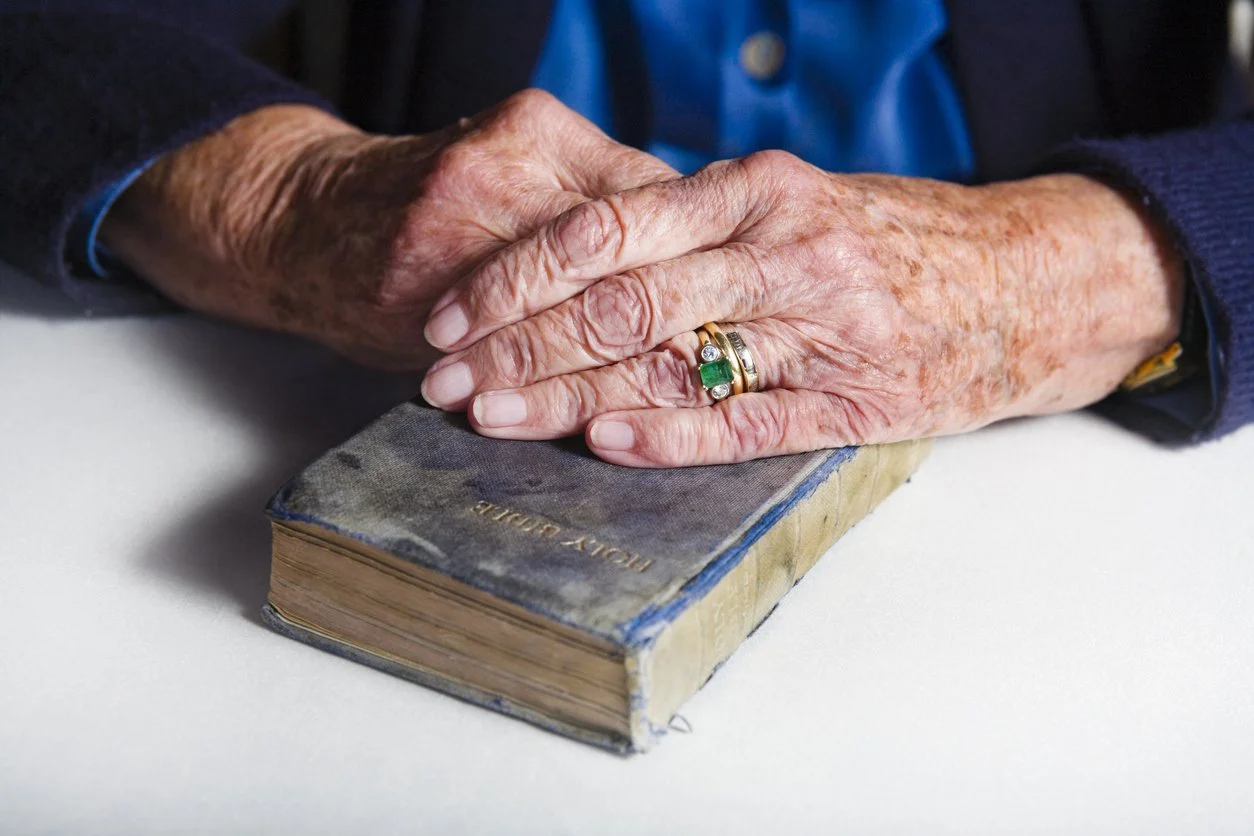
“They also serve who only stand and wait.”
I was first introduced to the sonnets of John Milton in college. One in particular, no. 19, “On His Blindness,” has stuck with me. In it, Milton reflects on the question of his value to God as a writer now that he is going blind. He ends by observing that a king with thousands of servants rushing about doing his bidding is equally served by others who stand by, waiting.
I thought of this poem when I read Erica Fehr’s July 8, 2025, reflections on intrinsic and extrinsic value, which touch on one of the most profound questions of our time: what makes a life valuable when strength evaporates and productivity diminishes? In a culture where worth is often measured by output, activity, or visibility, the reminder that our value rests elsewhere is both needed and urgent.
At the centre of the Christian vision is the conviction that every person bears the image of God (Genesis 1:26–27). This truth grounds our worth—it cannot be earned by achievement and is not diminished by disability, aging, or decline. As Fehr observes, nothing alters this reality. Of course, the roles we fill, the work we do, and the contributions we make have significance, but they are always secondary. God looked upon creation and called it “very good” (Genesis 1:31). Our being is blessed before we ever do anything.
This conviction lies behind Christian resistance to the utilitarian logic that dominates so much of modern debate around abortion, poverty, disability, or MAID. To stand with the vulnerable is to insist that every human life bears immeasurable dignity, stamped as it is with the image of God.
Intrinsic value is more than a theological principle. Older believers who have walked with Christ embody the perseverance of discipleship, what Eugene Peterson called “a long obedience in the same direction.” Their presence tells younger generations that faith is not a sprint; it’s not even a marathon. It is a lifelong pilgrimage. The psalmist affirms, “They will still bear fruit in old age, they will stay fresh and green” (Psalm 92:14–15).
Churches are accustomed to people stepping aside once they can no longer carry out visible ministry roles. But does that mean that they stop serving? An arthritic hand lifted in prayer might speak hope more powerfully than any sermon. The steady presence of elderly saints reminds us that God’s promises endure beyond the rush of modern life.
In God’s kingdom, service is never confined to the active or visible. The quiet companionship of sitting at a bedside, a smile offered across the sanctuary, or whispered prayers in the night are all forms of holy work.
The Christian tradition has long affirmed prayer and worship as true vocation. Monastics understood their cloistered lives as intercession for the church and the world, a hidden calling that sustained the people of God. Likewise, the Jewish teaching of tikkun olam, repairing the world, reminds us that God entrusts his people with the work of mending creation. For Christians, this resonates with Paul’s vision: “that God was reconciling the world to himself in Christ” (2 Corinthians 5:19).
The point is that just because our capacity for performance has lessened, the call to repair the world is not out of reach. Prayer, presence, endurance—these are themselves acts of restoration. To intercede for others is to weave hope into the torn fabric of life. By enduring faithfully in weakness, we can resist a culture that idolizes strength. Even the smallest gestures become part of God’s renewing work. Gentle words, quiet trust, and the courage to remain open to God have rich gospel potential.
Simeon and Anna in the temple (Luke 2:25–38) embody this waiting vocation. Their long lives culminated not in accomplishments but in the simple act of recognizing Christ. To wait in faith is itself a participation in God’s redemption.
And then there is the way in which churches too frequently mimic the values of society as a whole. Perceptions of ministry often reflect our wider cultural preoccupation with productivity, equating ministry with leadership, activity, and output. Yet Paul insists, “those parts of the body that seem to be weaker are indispensable” (1 Corinthians 12:22). Weakness is not an obstacle but a place where God’s grace shines clearly (2 Corinthians 12:9).
When we limit our definitions of effective ministry to activity, we risk overlooking those whose faithfulness is lived quietly in weakness or dependence. To follow a crucified Lord is to embrace the paradox of glory revealed in frailty.
The gospel proclaims that our lives are precious to God. Paul urges believers to “offer your bodies as a living sacrifice” (Romans 12:1). This call is not bound to youth or strength, nor does it end with retirement. Every stage of life can be offered as worship.
Jesus blesses the poor in spirit, the meek, and those who mourn (Matthew 5:3–5). God delights in lives that rest in his mercy even when stripped of worldly strength. An elderly saint in a care home, a disabled believer unable to “contribute” in conventional ways, a sufferer who endures with trust in Christ—all testify to the truth that God values being as much as doing.
I was reminded of this when, a few months ago, my wife visited my ninety-six-year-old mother in her care home. My mother, now living with dementia, was sitting in her wheelchair at the nurses’ station, leading what appeared to be a worship service. She no longer remembers daily details, but in her imagination, she had gathered residents and staff into a congregation and was leading them in prayer, proclamation, and song.
Of course, no hymns were actually sung. There was no intelligible sermon. Yet her gestures and voice carried the weight of decades in pastoral ministry. Her somewhat incoherent rambling flowed seamlessly into a clear and precise recitation of the Lord’s Prayer. The hallway became a sanctuary, the nurses’ station an altar, the passersby a congregation.
This was no make-believe moment. It was a parable of worship as Pope Benedict once described it: a form of holy play that prepares us for eternal worship. In true play, there is no utilitarian purpose, no striving for measurable gain—only joy, beauty, and delight. My mother, caught up in her imagined liturgy, was rehearsing for eternity.
And in that moment, her act of worship was as real and effective as any she had offered in her fifty years of active service to the church. She was inhabiting a vision of ministry that is not measured by sharpness of mind, physical capacity, or visible outcomes. Her ministry was a communion with God offered for the sake of others. It was waiting for the Lord (Psalm 130:5). Even in her frailty, she was bearing witness to the eternal value of life rooted in God’s call.
And I would say more. She was not simply remembering who she had been. She was revealing who she still is: a servant of Christ, an icon of the worship that will one day fill heaven and earth.
To affirm intrinsic worth is not to dismiss the value of fruitful labour but to place it within a deeper truth: we are created in the image of God, called to actively represent God in creation, but undeniably loved before we ever act, and cherished before we contribute.
The church must live this truth. We must honour the elderly as witnesses of faith, affirm presence as ministry, and resist narrow, ableist views of Christian life. For in the end, our value is not secured by what we do, but by the God who names us his own. And that is all that matters.
Photo credit: iStock