The Anabaptist and the wasp
How a picnic taught me about peacemaking with creation
Our history with creation
The first generations of ethnic Mennonite immigrants to Canada were known for their rural lifestyle and for the pride they took in beautifully kept gardens and farms—most of which had to be started from scratch. God’s creatures were part and parcel of daily life.
When local historians in my hometown of Steinbach, Manitoba, talk about the area, they speak of the Bothwell cheese factory and the hatcheries, the teams of horses and the hog butchering days, the family milk cow and the prizewinning livestock. Sometimes they tell funny stories too, like the time a farmer hauled leaking manure tanks past an evangelistic tent revival outside of Steinbach and stunk up the place so badly that attendance dropped for the next service! Today, many of us live in urban centres, but others still farm, and we’re (usually) fond of our rural heritage.
When historians tell of our ancestors’ arrival from Russia, they also never fail to mention two other creatures: ravenous crop-destroying grasshoppers, and hordes of bloodthirsty mosquitoes. These insects added insult to injury during years of drought, poor crops, and other struggles. It seems that life for our newly-Canadian forebears could be a hungry, itchy one. Being a people of the land was not always an easy task.
Mennonite believers are also known for certain parts of our theology. In particular, we can be distinguished by our Anabaptist commitment to peacemaking; that is, our belief in non-violence, reconciliation, and in finding creative solutions to conflict. We work toward peace by looking for ways to care for those who are suffering: providing food or meeting other needs for those who are struggling, and supporting the downtrodden. In the EMC, peacemaking is part of our Statement of Faith. Scripture, we insist, shows us that “we may not participate in or support anything that will violate this life of peace but should be peace makers and ministers of reconciliation” (EMC Statement of Faith, article 9).
We Anabaptists work for peace. Why? Because Jesus is the Prince of Peace. Peacemaking is part of who we are as a body of believers in Christ.
Now, I don’t know about you, but I’ve often thought of peacemaking as something I do by giving money to organizations working in war-torn countries. The sacrifices made by people like Dirk Willems or conscientious objectors in wartime also come to mind. So does reconciliation between family members, choosing to discuss charitably with one another instead of becoming polarized, and gathering together despite political or theological differences. Peace, to me, has to do with people.
It’s a different story with our relationship to the land. As our grandparents did, my family has chosen to grow most of the fruits and vegetables we eat. In the midst of planting, weeding, watering, mowing, and pruning, we also pick potato bugs without a second thought, try to keep the squirrels and deer from eating our harvest. And though we don’t generally contend with hordes of grasshoppers, the mosquitoes are as hungry as they ever were when our ancestors arrived in Canada. Our relatives who farm on a larger scale have their own set of challenges with animals. Creaturely conflict is a normal part of rural life, just as it was for previous generations, so I don’t usually think about peacemaking with creation.
Or at least, I hadn’t thought about it until our friends came to visit and share an outdoor brunch.
A fall happening
In Manitoba, wasps and picnics go together. Show up to an event in the great outdoors with food, and winged visitors will follow. We expect it. Outdoor eating in late summer and early fall requires one hand over a soda can and an ear open for the sound of buzzing. So, when we hosted our friends for brunch, we expected a few extra guests.
But that day, something was different. Our maple syrup and waffles were bug-free, and we weren’t fighting to protect our iced coffee. In fact, the wasps didn’t seem to be around our deck at all! The difference felt odd enough that we spoke about it. One of our friends suggested that perhaps the wasps were content because “they have what they need.”
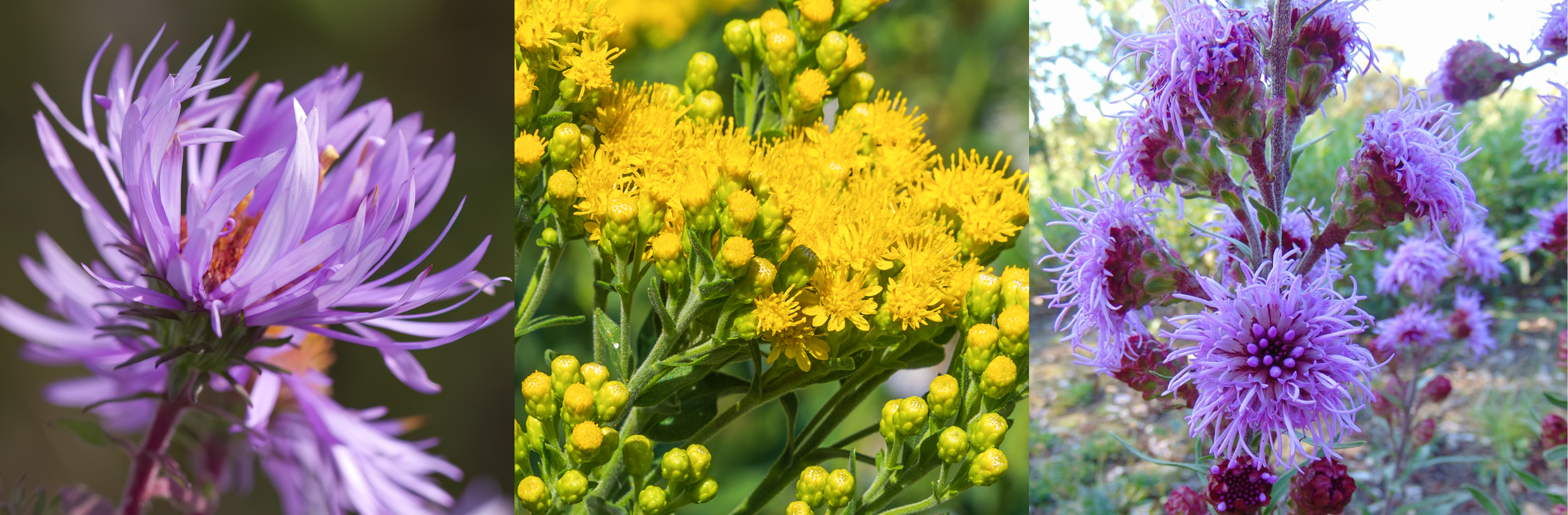
I hadn’t noticed this before, but as I thought more, I realized she had a point. We had planted many local species of flowers in parts of our small acreage; across the yard, goldenrod, asters, and meadow blazingstar were in full bloom even though it was the beginning of September. The wasps were around, all right, but they ignored us, hovering around clumps of purple and yellow blooms. Over there meant they weren’t over here. We ate in peace.
Was it possible? Could it be that we had accidentally made peace with wasps?
Connecting creation to the God of peace
This question sat in the back of my mind for the next few months until I decided it was time to do some research. Several articles I found suggested that my friend was right: science seems to tell us that when wasps are hungry, they become more aggressive. I also learned that wasps are hungriest at the end of summer because their food supply dies off at the same time of year that populations are highest. No wonder they’re grumpy! It seems that, completely by accident, that fall we provided the wasps with enough food that they didn’t need our sugary drinks.
I learned something. But there was more to learn. Now that I knew my friend was right, I wanted to see what God might have to say on the topic. I’m a seminary student in the field of systematic theology—I get to spend many hours trying to understand who God is and what he wants for us as his people. As a member of the EMC, I’m also an evangelical; one of the things that helps define our faith as “evangelical” is that we care very deeply about Scripture.
How might these wasps fit with Scripture’s idea of peace?
It turns out the Bible has a fair bit to say about animals and peace. Isaiah 11:6–9 is one example; it’s the famous “peaceable kingdom” passage. “The wolf will live with the lamb, the leopard will lie down with the goat, the calf and the lion and the yearling together; and a little child will lead them.… They will neither harm nor destroy on all my holy mountain, for the earth will be filled with the knowledge of the Lord as the waters cover the sea.” Scholars debate what exactly those words mean, but one thing everyone agrees on is that this picture of peace, where creatures and humans live quietly together, represents God’s intentions better than violence does.
Someday, in the new heaven and new earth, God will redeem the whole world and make everything new. In the meantime, he calls us to participate with him, to represent his peace in the world. Old Testament scholars tell us that when God created humans in his image, he made us to be his representatives on earth as priests, caretakers, and administrators of his cosmic temple (creation), participating in God’s ultimate plan and pointing creation toward its ultimate goal: peace.
Peace? With wasps? Was I right in thinking that God meant me to learn about peace from a picnic?
There’s a theological term called “praxis” that maybe helps explain why I think the observations gleaned from this picnic were important for me to attend to. Praxis means that we aren’t meant to just think about what God wants; instead, we should also learn lessons from our actions. We learn by doing. Now, the idea of praxis cannot replace Scripture. Scripture is authoritative and praxis is not. What praxis can do, I think, is help us refine our interpretation of Scripture.
I understand praxis this way: God tells us in Scripture that he is a God of peace, and he invites us to be part of his peacemaking. When I know that God desires peace, I am more likely to recognize instances of peace in the world. I can take what I notice, return to Scripture, and check to see whether this instance of peace matches God’s intentions. In the case of these wasps, nature alerted me to an idea I find evidence for in the Bible: God’s plan for the peace of all creation. Learning from fall picnics seems to fit quite well into a praxis process. The only question I had left was what I should do with what I’d learned.
Living in the “now but not yet”
Now, peacemaking with creation, lessons from daily life, and God’s intentions in Scripture might sound lovely, but there’s a problem. We haven’t yet fully arrived in God’s redeemed creation. The world around us is full of conflict between many different species, and often, peace seems nothing more than a far-off dream.
Our theology tells us that peace is coming, but our heritage reminds us that it hasn’t yet fully arrived. Think back to those early Russian Mennonite immigrants. There doesn’t seem to be any way our ancestors could have lived peacefully among hordes of grasshoppers; instead, their crops were lost. In a more recent example, two summers ago my husband and I found our batch of young chickens slaughtered by a mink. That chicken run was as secure as we could make it. Or what about those wasps? Was my yard safe for those who have anaphylactic allergies? Sometimes, creation is not peaceful. What about the human body and its protein needs? God provides us with animals for food, but isn’t that violent? And what should we do about mosquitoes?
I really don’t know how to make peace with a mosquito. Or potato bugs. To be honest, it’s difficult to practice peacemaking with other humans, let alone creation, so while I do believe I am called to peace, including with flora and fauna, I don’t always know how to move toward that goal in a broken world. I’ve wondered about the idea of doing what I can, and for the rest, taking redemptive “baby steps.” Perhaps I can at least minimize the harm I inflict on the world around me? It’s not a satisfying answer, but in a broken world, perhaps it’s the answer we must accept for now as part of a creation groaning together (Romans 8:22). All of creation waits for peace together.
While the earth and I long for redemption, I can also participate in God’s coming peace using what I do know. I can show the “now” in the “not yet!” That fall picnic did change my response when creation and I rub up against each other. Since then, we’ve moved to a new property where we’re taking steps to live in peace—a little at a time. We’ve put up fencing to keep rabbits out of our gardens; otherwise, they’re welcome to roam. We’re prioritizing natural gardening methods to avoid harming the insects who come to pollinate our crops. We’ve also planted native flowers among our vegetables to welcome the butterflies, bees, and wasps, but perhaps far enough away from our door to avoid endangering allergic guests.
I don’t have all the answers. But because I am an Anabaptist, I believe I am called to live in peace with those around me. Because I am an evangelical Anabaptist, I also want life to constantly lead me back to Scripture, revisiting passages like Isaiah 11:6–9 and allowing their words to shape me.
God, please grant that I be willing to imitate You, whose peace extends outward to humanity and to the rest of creation, in whatever way You see fit.
Photo credits: 1. iStock/public domain; 2. iStock, iStock, Wikimedia Commons; 3. iStock