Work and worship
Everything we do matters to God and to the church
A note from the author: Although this has been a topic of research and interest for me for many years, much of my recent thinking on work and worship comes from a seminar I attended in Grand Rapids Michigan in summer 2023. In fact, the systolic/diastolic function of the heart as a metaphor for a life of work and worship came to me originally from that seminar. That seminar was facilitated by two authors of a book called Work and Worship: Reconnecting Our Labor and Liturgy by Cory Wilson & Matthew Kaemingk.
“Here’s a photo of my Covid test,” she emailed. “It proves I can’t come to my piano lesson today.” That may seem like a normal correspondence from a university student to their piano instructor, especially during the pandemic, but something didn’t sit right with me.
My latest challenge at work was guiding this student to the realization that they would not be receiving university credit for their work that semester. I was navigating a tricky situation with a student in the context of their tendency toward manipulation and deception. As a piano instructor, what was the most redemptive way forward? What would it look like for me to partner with the Holy Spirit’s work in this situation, in this student’s life?
If everything I do matters to God and to the church, how I go about my work is of utmost importance. As worshippers of God, working with integrity is not optional; it is mandatory.
I recently heard a 23-year-old firefighter describe how he sees his workout regimen as worship. He has come to see how his diligence in building up his body’s muscles is an act of worship. The next time he is on a call to help someone in distress, for example, he will be able to lift a person trapped at a difficult angle and get them to safety because of the integrity of his everyday work. This is how he sees himself as a coworker of God while he’s at the gym.
God is a worker. The first thing God reveals about himself in Scripture is that he is a creator and a worker. God chooses to work, and the work of his hands is good. According to Genesis, we were made to be workers to reflect the image of the ultimate Worker.
When speaking of humans as image-bearers of God, the writers of Genesis chose language comparable to that of the ancient near eastern kings, who placed statues and emblems of themselves in cities under their reign. These images represented the king’s rule, reminding the people what the king was like. The work we do in our factories, homes, neighbourhoods, offices, schools, fields, airports, and so on, when done God’s way, will show the world who God is, and will partner with the Holy Spirit in living out Christ’s redemption here on earth. All human activity, the work of our hands, has potential to display the action and character of God. All good work, when done God’s way, helps the world see God.
How do a piano instructor and a firefighter work as image-bearers of God? As God’s image, we are created to worship God and to reflect God in the world.
Let’s think of it this way. A healthy heart beats with a predictable rhythm. It draws blood in. It sends blood out. This diastolic and systolic movement, this gathering and scattering, is how the entire body receives life-giving oxygen.
Worship is the heartbeat of the church. Like a heartbeat, Christian worship has a life-giving and predictable rhythm. Like a heartbeat, it has a diastolic and systolic function.
Our Sunday worship service welcomes and gathers people in. Like the valves of a healthy heart, our doors open to draw people in for worship and then close to send and scatter people out into their week of work. In and out. Pull and push. The regular pattern of one day in and six days out. That rhythm is deliberate. It was designed by our Creator.
Gathered and scattered. Welcomed and sent. This is the heartbeat of healthy Christian worship.
If we stayed in one place, whether in the sanctuary or in the workplace, our spirits would begin to decay. This to-and-fro movement in God’s Spirit is life-giving—it is oxygen.
Gathered:
On Sunday morning, someone unlocks the doors, turns on the lights, puts out the bulletins, and prepares to welcome the people of God to a time of worship. We enter the sanctuary, carrying our whole lives into the presence of the Lord. We carry our tears and lament, our losses and our gains, our successes and joys, our very real struggles to live under God’s instruction. We bring every interaction we’ve had this past week with friends, family, co-workers, neighbours.
We bring the first 10 percent of all that we’ve earned as a firstfruit offering. We gather to receive assurance, pardon, renewal, rest.
God, in his goodness, commanded a Sabbath rest to enjoy the work we have done. Somehow, the rhythm of the week feels just right. Every seven days I am ready to set aside time to delight in the work that God has accomplished in us and through us. Every seven days I am ready to image God by gathering with the people of God, looking back at the work we’ve done, resting in the satisfaction of the accomplishment. Every seven days I am reminded that my work is secondary, reflecting the completed primary work of Christ.
Scattered:
When the gathered worship is over, the ushers will turn out the lights, put things away, and lock the door. Our encounter with God during gathered worship transforms us, renews our minds, and sends us into the world for six days of work.
As we leave, we carry the grace of Christ, the law of God, and the power of the Holy Spirit into the world. We are scattered into the world to love and serve God in a thousand different ways, through the circumstances of our life. Now we continue to worship God through the excellence of our work. We live out the church’s story with creativity and integrity.
God has a story to tell, a Word to proclaim, empowering grace to offer, ongoing work to accomplish. As people who have experienced God’s righteousness and transforming love, we have the honour and responsibility to work alongside God. Flowing from our wonder at the beauty of God, our gratitude for the gospel of Christ, we find ourselves eager to work in partnership with God’s good work in this world.
All work, done God’s way, is valuable to God. Imagine the delight God takes in the work of a labourer building a house for those who need protection, the work of a lawyer seeking a more just world so that all people may thrive, the work of a grandmother teaching her grandchildren to bake bread in order to provide sustenance, and the work of a stay-at-home neighbour who watches out for the safety of the community.
Likewise, I felt God’s delight in my work as I navigated the difficult situation with my piano student. Through the empowering grace of God’s Spirit, I was able to guide us to the end of the semester in a way that honoured the student, the academic rigour and requirement of the university, and myself as the instructor. I offered my work to God in worship, learned valuable lessons through mistakes I made along the way, and enjoyed the outcome that brought honour to all involved. This work is part of my vocation before God.

Every September, Fort Garry EMC (FGEMC) launches into a new annual worship and preaching theme. This past year we took a deep dive into the theme “a whole and holy life.” Present every part of yourself to God as an instrument of righteousness (from Romans 6:13).
We were helped by a Vital Worship Grant from the Calvin Institute of Christian Worship, allowing us to deepen our connection between the everyday work we are called to and our Sunday morning worship services. It has been an intensive year of focus, infused with a transformational sense of how important our work is to God and to the church.
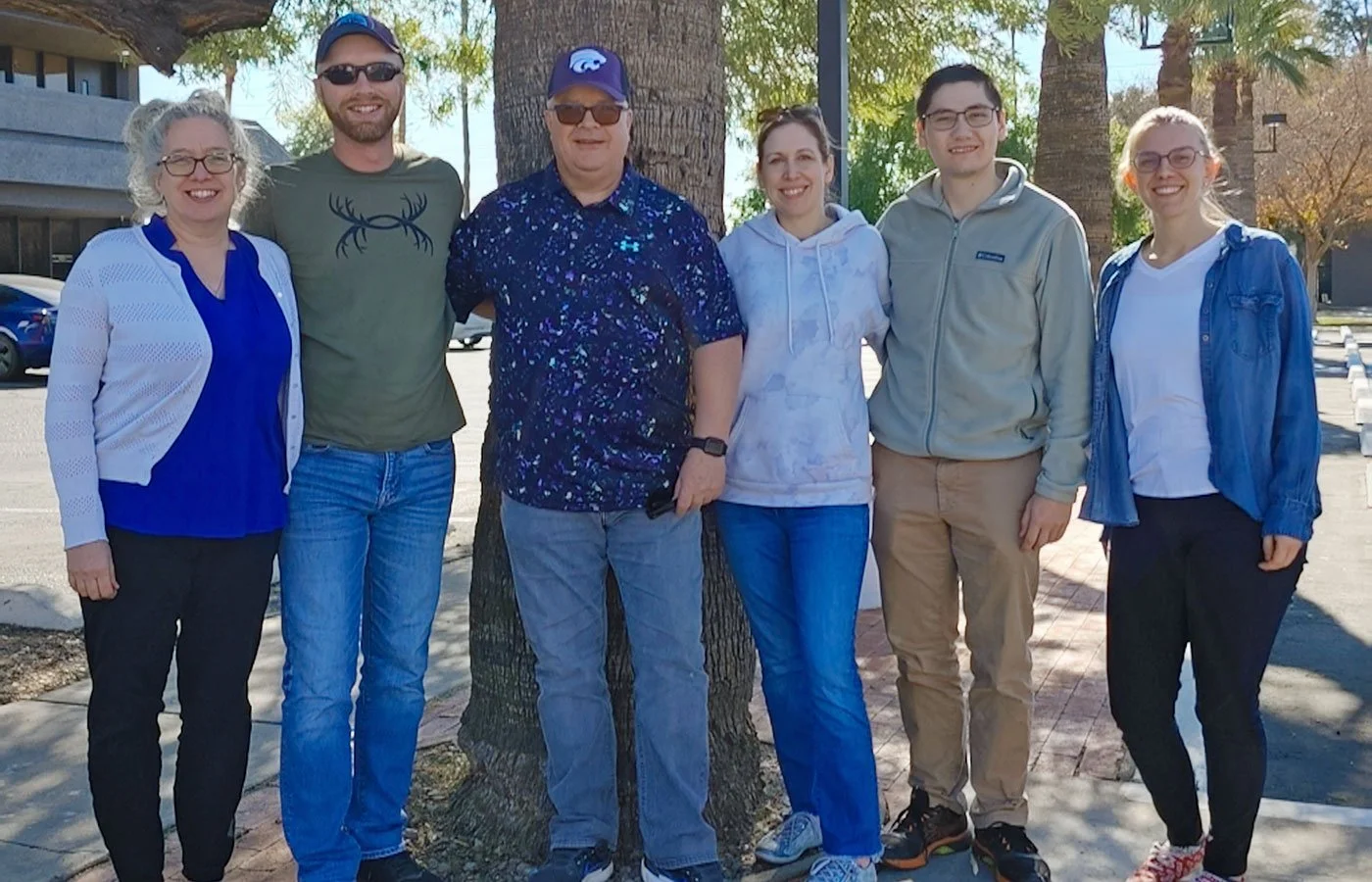
1) We sent six FGEMC leaders to a work and worship seminar in Tempe, Arizona, presented by the Institute for Mission, Church, and Culture.
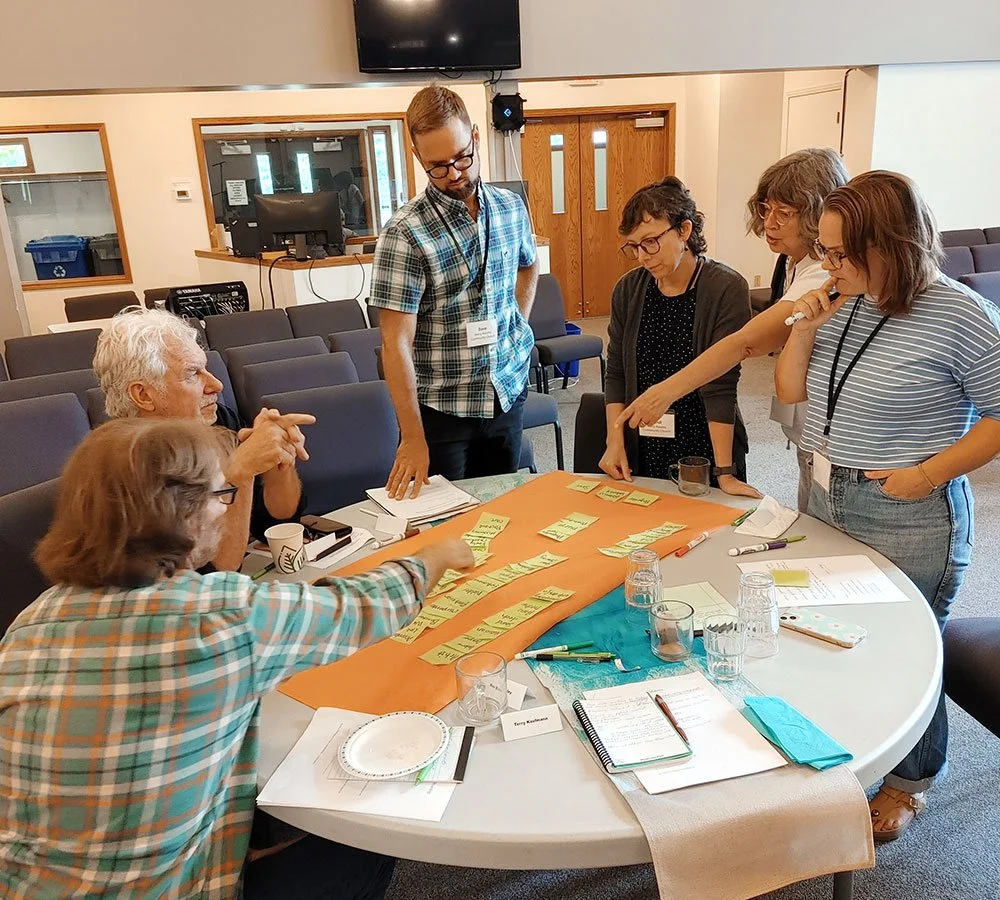
2) We sponsored a one-day vocational leaders workshop at FGEMC for inspiration and strategic conversation of distinct categories on workers in our congregation.
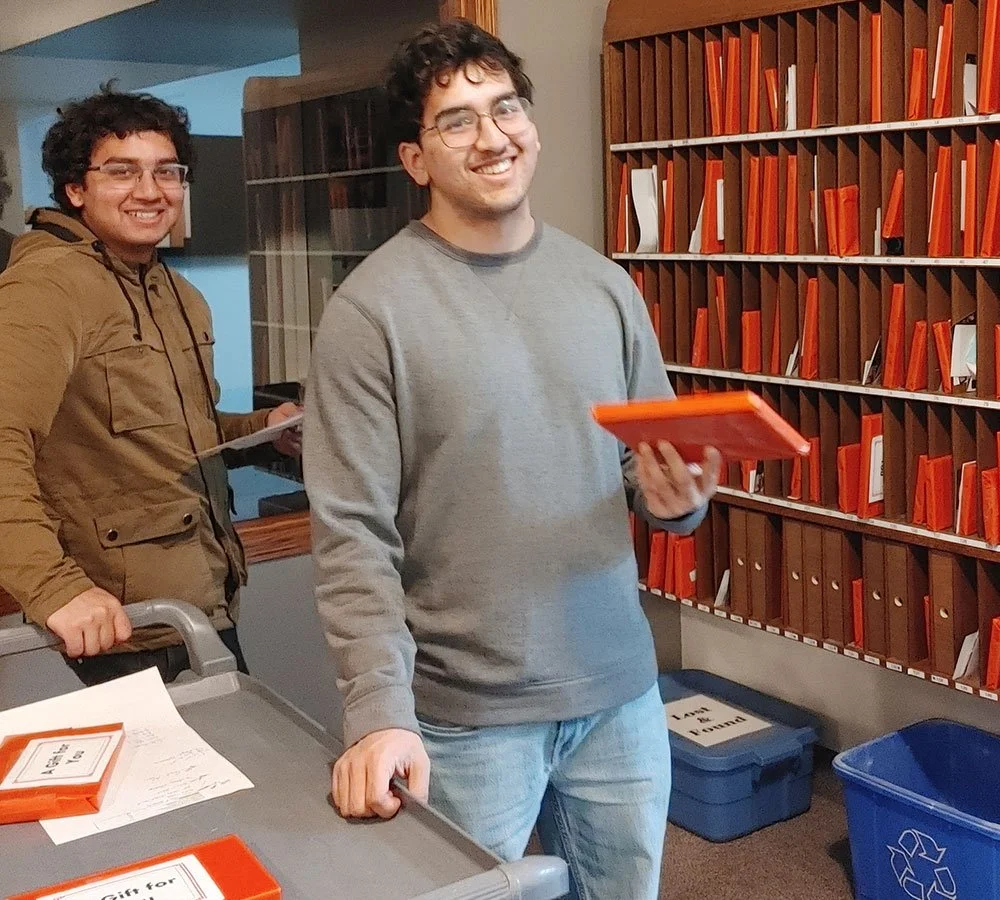
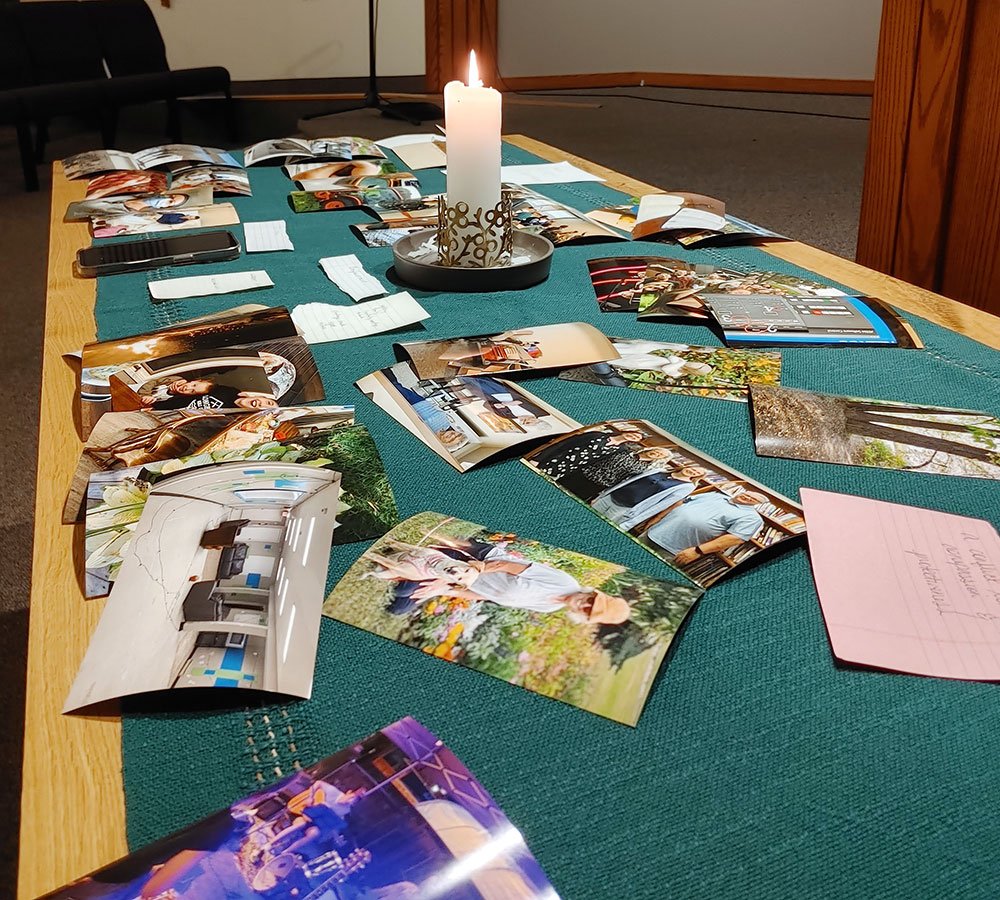
3) We created a video installation called TTT = This Time Tomorrow. It is an electronic witness, photos of our congregants at work, displayed in our church foyer.
4) We created an electronic ministry map illustrating the places of work and leisure that our congregation is engaged in.
5) We engaged in a skill-mapping survey and assessment with our congregation by Made to Flourish, an organization that empowers churches to integrate faith, work, and economic wisdom.
6) Several fabric artists, mostly from our congregation, designed and created a banner for our sanctuary that artistically reflects how our work is caught up in the majesty and action of the eternal Triune God of the Bible.
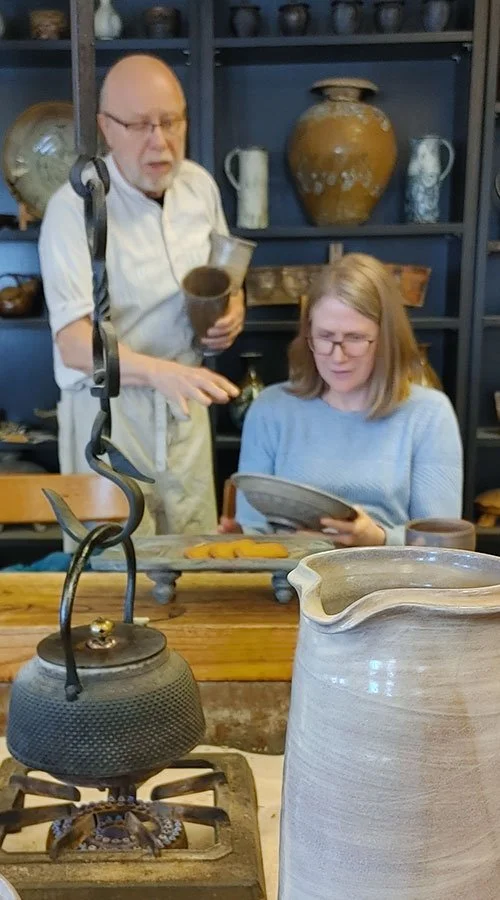
7) We commissioned a liturgical artist to create pottery vessels for our congregation’s celebration of the Lord’s Supper. These functional works of art promote visual expressions of Christ’s primary, completed work on our behalf and our own secondary work and its produce on Christ’s behalf.
8) As a church family, we created vocational prayer beads to support each person’s journey toward work and worship integration.
9) We provided a book relating to work and worship, Courage and Calling; Embracing Your God-Given Potential by Canadian author, Gordon T. Smith, for each household to use for shared learning.
10) We hosted an experiential work and worship workshop for local church leaders, EMC and otherwise. Our speaker, Katie Ritsema-Roelofs, managing director of the Worship for Workers project with Fuller Seminary, was a valuable consultant throughout our Vital Worship project.
– Glenda Friesen