The gospel is revealed in community
the appeal of the EMC
Editors’ note: This is the sixth in a series of six articles exploring some of the theological variation we find in the EMC. Our goal is to grow in our understanding of why certain theological positions are attractive to people in our churches, with the hope that this will help us have more informed conversations.
In our next issue, EMC Conference Pastor Andy Woodworth will write an article that guides us in moving forward.
It was probably the most pickles I had seen in my life. Whole dishes, in fact, were dedicated to containing vast quantities of the canned cucumbers. And not only pickles were in supply that day. Large amounts of cheese, meat, and bread rolls had been carefully placed on serving trays and arranged on long rectangular tables in the church’s basement. Soon, hundreds of people would file down the stairs, past the luncheon spread, to the dozens of other tables prepared with napkins and white porcelain mugs.
This was one of my first experiences with an Anabaptist congregation outside of the Sunday morning service: a funeral for a beloved member of the church. For this funeral I had the opportunity to serve tea during the meal after the service, allowing me to observe the room. What I saw was not only a sense of sadness at the loss of a loved one or joy in celebrating a life well lived, but the room was filled with a deeper familial character. In other words, this was not only a funeral, but a family meal.
This is not to say that other Christian denominations lack the ability to care well for people in their funerals, but this funeral seemed to capture the essence of the Anabaptist vision for church: it happens in community. Anabaptists do things in community. Scripture is read in community. Discipleship is done in community. Transformation happens in community. And Jesus is the undisputed rock of that community.
The Anabaptist vision is that Christian mission is carried out with people who hold a mutual love, passion, and conviction for Christ. These may be seen as common ideas in the evangelical movement, but history shows that Anabaptists predate evangelicals. It is Anabaptism’s aspiration to place faith within the context of a specific congregation that makes it such an attractive tradition.
A grounded theology
One of the often-overlooked merits of Christianity in the contemporary Christian culture is its value as a worldview. Perhaps it’s not in our wheelhouse to dabble in questions of philosophy; it isn’t my expertise either.
However, all people for all time have held a worldview. A worldview, simply put, is a set of ideas and beliefs about how the world is and should be. Worldviews help individuals define right and wrong, progression and regression, and, most importantly, their role or function in the world. Though individually nuanced, a worldview is generally derived from a person’s faith, culture, and community of origin. Western culture’s worldview has generally been defined by the Christian story found in Scripture. This is important to understand today, as some in our culture seek to abandon parts of this worldview.
Living without a worldview is like being told to dig a hole in the middle of a field, with no discernible reason for the hole or any knowledge of its size. It becomes hard to continue digging.
That’s the position we find ourselves in currently in the West. The cultural norm is to tell people, specifically young people, that they are not bound by traditional marks of a worldview. They can be whoever they want, do whatever they want, and create the person they want to be with no boundaries. Tellingly, the slogan for my wife’s high school graduation class was “undefined.” All well and good until it is the responsibility of the individual to define themselves. That is no small task. (The book 3 Big Questions That Change Every Teenager: Making the Most of Your Conversations and Connections, by Kara Powell and Brad M. Griffin is a good resource on identity and meaning in the lives of youth in the 21st century.)
This is where the Anabaptist tradition shines. While it offers a traditional Christian worldview, it is grounded in a strong sense of communal life that gives us a place to practice that worldview. Anabaptist spirituality not only furnishes the theological and philosophical house with good, solid (probably Amish-made) chairs, tables, and sofas, it also brings people to come sit together in those chairs to live in that shared story. In this way, Anabaptism provides a wonderful place for people to find identity and meaning.
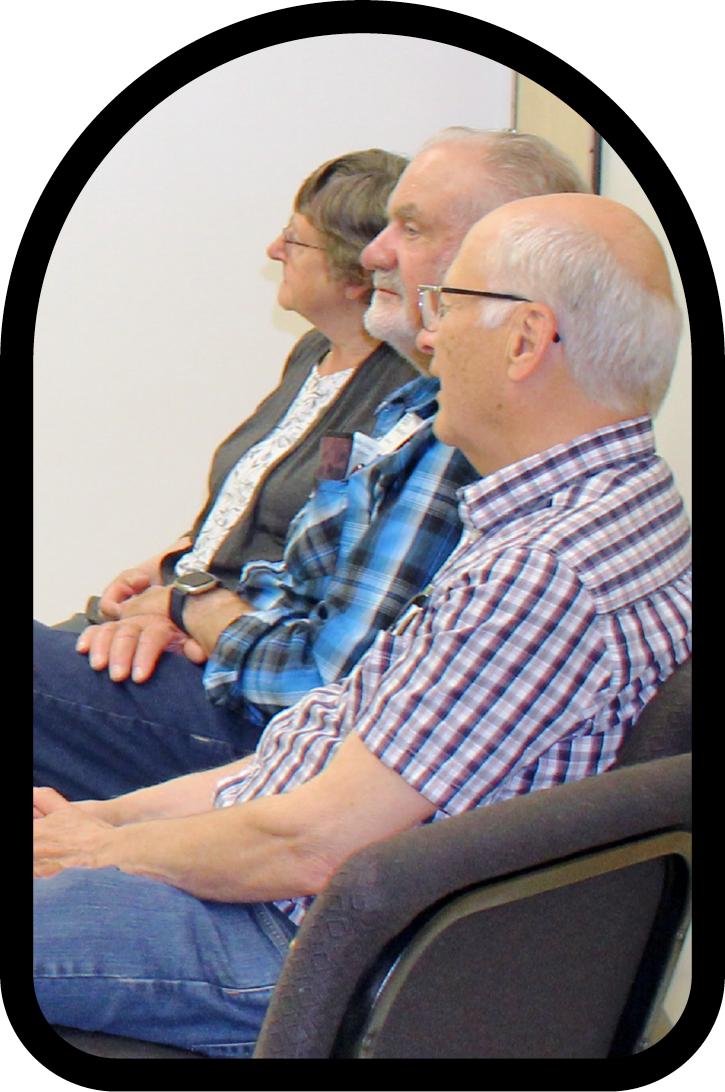
Anabaptism stresses the importance of the congregation in providing context for the Christian identity in Christ. Christians are called to live out their identity together; faith is no private matter. The Anabaptist tradition beckons believers to be accountable and to serve one another. In a healthy congregation, believers become known by one another. The opportunity to meet Jesus comes through fellow believers; becoming like Jesus requires mutual submission. Oswald Chambers said something that rings true here: “We look for God to manifest Himself to His children: God only manifests Himself in His children” (My Utmost for His Highest). Perhaps that quote is too absolute, maybe it is not, but it reminds us that by living life together we are transformed into the children of God. Here, in the Anabaptist tradition, identity is found: a wonderful story of love and redemption to be grounded in, but more than that, a community to live that story in.
There is a lot to cherish in the Anabaptist tradition. In light of the needs of our culture (the need for identity, the need for meaning, and the need for love and friendship), this is an appropriate place to begin to discuss Anabaptism’s virtues: as a place to simply be Christian. To know ourselves in light of Christ. To be loved by him through his people. To be known by him and his people. Among believers, God’s people discover what it means to be made in the image of God. It’s a place where the poor in Spirit see the kingdom of heaven, the pure in heart see good, and mourners are comforted.
A Jesus-centred Bible
The Anabaptist understanding of Scripture is another aspect of the tradition that I find attractive. Anabaptists hold to a Christ-centred reading of the Bible. This means that Anabaptists interpret the Bible through the life and teachings of Jesus. It means that all Scripture answers to Jesus. Stuart Murray puts it like this: “Anabaptists today remain convinced that if Jesus really is ‘the focal point of God’s revelation,’ these narrative accounts and interpretations of his life, teaching, death, and resurrection must be central to our understanding of the whole of God’s revelation in Scripture” (The Naked Anabaptist).

This changes the way we read the Bible, I think, for the better. Christians’ views on how to read the Holy Scriptures can be quite different. Among Protestant churches especially there are many different and often-contradictory interpretations of passages. The Anabaptist model of placing Christ at the centre of interpretation avoids interpreting by bias or theological preference, or by choosing our favourite passages to hold above the rest.
For example, take the topic of violence. There are many passages in the Bible that depict acts of graphic violence or—in some places—seem to condone them. Christians have long run to these passages to justify war. In stark contradiction stand the words of Jesus in the Sermon on the Mount: “But I tell you, do not resist an evil person” (Matthew 5:39), and “but I tell you, love your enemies and pray for those who persecute you” (Matthew 5:44). Whether you think that these passages support strict non-violence or not, these words of Jesus cannot simply be discarded.
When congregations interpret the Scriptures, it is of great consequence to remember that, of all the revelations of Scripture, only one is spoken of as “the radiance of God’s glory and the exact representation of his being” (Hebrews 1:3), and “all the fullness of the Deity” (Colossians 2:9). God honoured Christ by making him the perfect representation of God. In interpreting the Bible, it is important to remember that Christ is not another prophet sharing God’s word, he is the Word of God itself.
A plan for peace
Of all humanity’s deficiencies—which are many—there seems to be a distinct lack of peace. We long for peace, but peace seems to evade us. Disunity and distrust seep into human relationships like the cold winter air seeping into an old house. In a chronically sinful world, we must ask ourselves how we can be reconciled to one another. The answer is in Jesus’ model of love and forgiveness.
Dusting off our EMC Constitution and finding the statement of faith, we will see that article nine outlines the Anabaptist commitment to peace. I did exactly this when I began attending an EMC church a couple of years ago. It was the first time I had encountered a church with such an article in its statement of faith. The article asserts that it was Jesus’ peaceful nature toward others that helped to bring reconciliation to the world. Our part, as his followers, is to continue that peace, in part through nonviolence.
Now, I will not claim that the Anabaptist movement discovered or created the ethic of nonviolence; as an Anabaptist, I believe Jesus is responsible for that. However, it is the Anabaptists who made this a strong point of their practice of faith. And, I think, for good reason.
In Matthew 5, Jesus reproaches his Jewish audience for their lack of love for outsiders. He says, “even pagans do that” (Matthew 5:47), referring to loving their own. Jesus, in his wisdom, saw that loving those who love us does little in the way of reconciliation; it is loving our enemy that heals.
I had a coworker who was keen to correct my work and would sometimes ask to do the job himself. Later, I found myself correcting his work after a failed inspection. Was this person my enemy? Certainly not. But even in an insignificant incident like that, there was a choice to be made: love and forgive, or hold on and resent.
The way of peace that Jesus illustrates is not as much about nations as neighbours; not a policy but a daily practice with the people we are closest to. To tie this back into our theme of community, the best place to begin practicing the way of peace is with the believer next to you.
Jesus-centred discipleship
Jesus’ version of discipleship looks different from ours. He took twelve men on a walking tour of first-century Palestine. He discipled them for three years. Replicating this model is difficult, yet it is the heart of what Jesus is doing here that is the key: living life together. As Christians, life is a shared event. Food. Laughter. Joy. Mourning. Pain. Spiritual growth and learning. Common experience pushes the collective further toward Christ. When believers share the Word with one another, practice peace together, and show Christ-like love, the kingdom of heaven is found on earth.
Christ’s message is not one primarily for entities: the nation states and the political tribes. It is one for the people, wherever they may be. It is a faith that puts a relationship with God and with my neighbour first. Discipleship is the heart of the Christian faith. As Dietrich Bonhoeffer said in The Cost of Discipleship, “Christianity without discipleship is always Christianity without Christ.”
From a skeptic to an Anabaptist
I did not grow up in an Anabaptist congregation; it was something I discovered attending Steinbach Bible College. My initial reaction was not affectionate; there is no complex structure of theological thought and, glaringly, the position of nonviolence is unpopular. But flipping through the pages of the New Testament turned a skeptic into an Anabaptist. I saw how stances on violence, Scripture, community, and Christian life were tuned to the message of Scripture. Anabaptism’s firm and plain love of Christ attracts me.
It reminds me of the funeral we began with. It speaks volumes about theology when congregations love each other well. You can feel it in your bones and smell it in the air, like I did at that funeral. These people were doing Anabaptist theology. When Anabaptist theology is practiced as it is preached, you can, as I did, walk into a funeral and see that these people really love one another.
Photo credits: 1. Joyce Wieler, 2. Lightstock
Other articles in this series:
Why this young theologian was drawn to Reformed evangelicalism
Ancient, continuous, and meaningful: why traditional, liturgical church practices draw me
Personal, hope-filled and Spirit-empowered: the appeal of charismatic evangelicalism
Compassionate, questioning and messy: the appeal of progressive Christianity
Missional, faithful, and with a deep love of Scripture: the appeal of fundamentalism
Embracing the EMC distinctives