
Featured

![Of puppies, productivity, and [im]perfection](https://images.squarespace-cdn.com/content/v1/6234b161ab9d2773b8b3f9e1/1789583085970-G9IN3UR7A4M3H15G9MXC/joe-caione-qO-PIF84Vxg-unsplash.jpg)






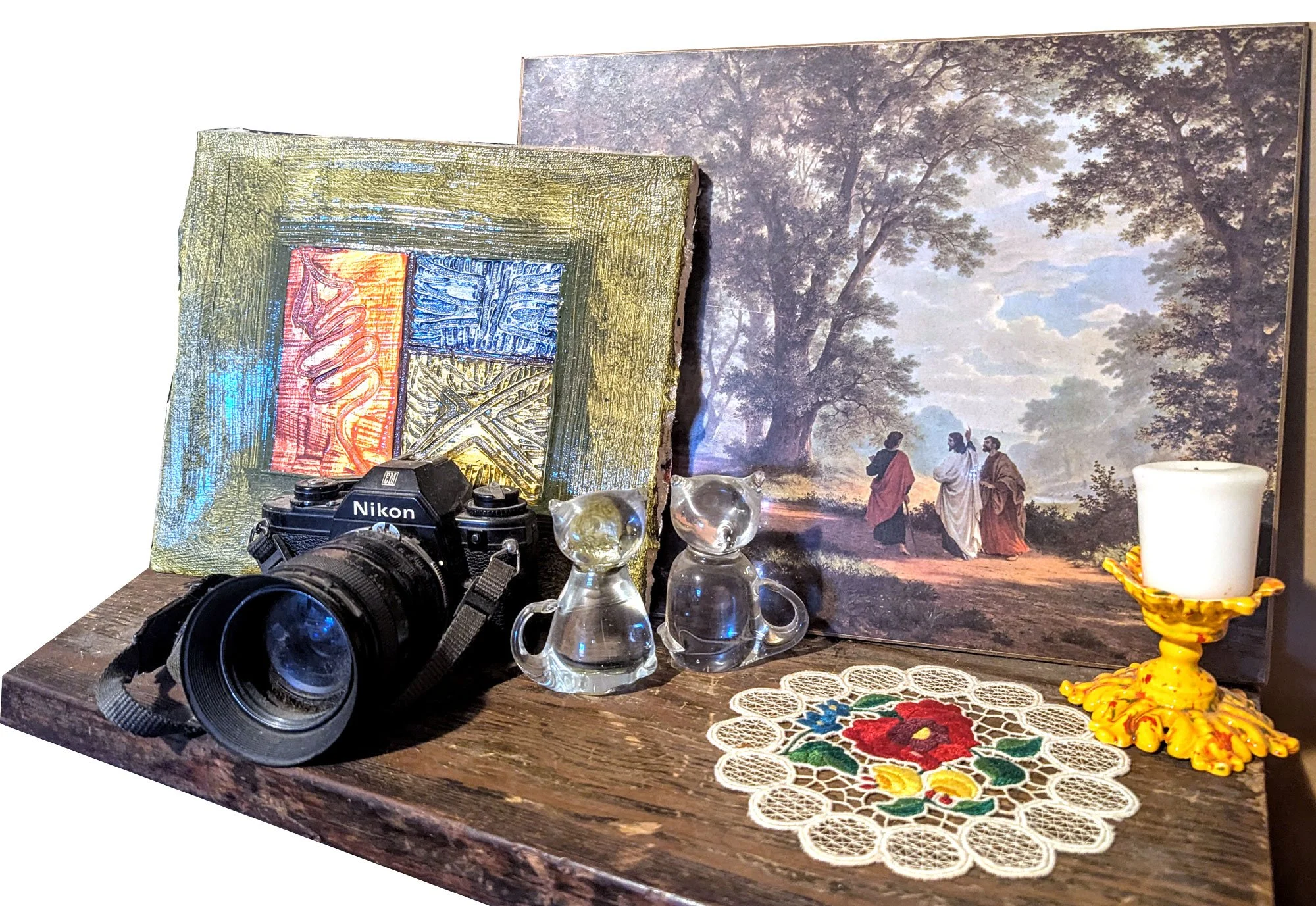
I’m a big fan of thrifting. Clothes, furniture, books, art, you name it—my home is filled with second-hand deals and vintage items that I’ve collected over a lifetime. A few of my favourites are an art-deco dresser I inherited from my grandmother, floral tins that decorate my cupboards, and a print of Swiss artist Robert Zund’s “Road to Emmaus” that I picked up at a church rummage sale.
For more than a decade, Cullen Klassen has been behind the camera telling stories. What began with homemade music videos and a GoPro camera eventually developed into a vocation focused on capturing stories of transformation and mission.
I had plans for the summer at home with our school-age kids. There would be time set aside for reading, time for teaching some life skills and family responsibilities, and time for some summer fun.
Then, mid-July, we got a puppy.
I never wanted to be an Anabaptist. Growing up in Winnipeg, I grew up a Baptist pastor’s kid who went to seminary and became a Baptist pastor. I never experienced a crisis of faith, probably because my parents were excellent role models. Their integrity convinced me that what I was being raised to learn was right, and I have retained much of what they taught me.
According to the Merriam-Webster Dictionary, joy is defined by such words as bliss, great pleasure, happiness, or delight. Without a doubt, joy can contain elements of these emotions because we have experienced them in certain situations in varying degrees. None of these words are contrary to how the Bible would define joy; however, this seems too simplistic and temporary compared to the biblical view of joy.
As we consider the current context of ministry in Canada, there are many reasons to be encouraged. Openness to the gospel itself is higher than ever, and willingness to accept an invitation to church is way up.
SBC’s Leadership Conference topic this year was The Transformative Presence of Jesus in Baptism and Communion. Patrick Franklin, associate professor of theology at Tyndale University, was the main speaker for this weekend. He assumed the task of walking through perspectives on baptism and communion not familiar in our churches.
Dennis Rader said, “I was a good man, who just did bad things.” Who is Dennis Rader? True crime fans will recognize his name, because Dennis Rader is a serial killer better known as BTK—an acronym for his modus operandi. He bound, tortured and killed his ten victims.
For the past few years, I have asked what it means to be the Evangelical Mennonite Conference. What are the elements that make us who we are? What combination of flavours gives us a distinct style and approach to ministry that identifies us as being EMC? What values do we commonly hold that shape our ministry mindset? Because they exist.
I was first introduced to the sonnets of John Milton in college. One in particular, no. 19, “On His Blindness,” has stuck with me. In it, Milton reflects on the question of his value to God as a writer now that he is going blind. He ends by observing that a king with thousands of servants rushing about doing his bidding is equally served by others who stand by, waiting.
When historians tell of our ancestors’ arrival from Russia, they also never fail to mention two other creatures: ravenous crop-destroying grasshoppers, and hordes of bloodthirsty mosquitoes. These insects added insult to injury during years of drought, poor crops, and other struggles. It seems that life for our newly-Canadian forebears could be a hungry, itchy one. Being a people of the land was not always an easy task.
The moment we arrived home, chaos met us at the door. Our daughter had developed a bladder infection that invaded her kidneys. To add to the chaos, we discovered water in the basement. I had a cavity to get filled. And my wife was under pressure to submit multiple seminary papers despite having neither the time nor the mental space. Within hours, we moved from rapture to rupture.